Puppy agility foundations training in New York City with a positive reinforcement dog trainer
CPDT-KA Certified PhD Behavioral Neuroscience

Puppy Agility Training in NYC

A thoughtful, age-appropriate introduction to agility foundations for puppies that builds confidence, coordination, focus, and teamwork through positive reinforcement.

Safe Foundations Confidence Building Low-Impact Learning Thoughtful Puppy Training
Puppy Agility Foundations in NYC — Safe, Thoughtful Early Training

Puppy agility training in NYC should not mean asking too much of a young dog too early. It should mean building the right foundations: confidence, body awareness, focus, handler engagement, and calm, joyful learning.

Our agility classes are for puppies 6 months or older and are designed as a safe, age-appropriate introduction to movement-based training. The goal is not advanced sport work too early. The goal is strong foundations that support both future training and everyday life.

This is thoughtful early training designed to help puppies learn how to move, focus, and work with their person.

Definition

What Puppy Agility Really Means

When people hear “puppy agility classes,” they often picture baby dogs running full courses and launching over jumps. That is not what thoughtful puppy agility training should look like. Puppy agility is about foundations. It teaches the pieces that come before advanced sport work: confidence, coordination, focus, movement skills, handler communication, and safe obstacle exposure.

In practical terms, puppy agility training in NYC means giving a young dog structured learning opportunities that build curiosity instead of pressure. Puppies learn how to use their bodies, follow handler movement, engage with training, and approach novel challenges without becoming overwhelmed. Those skills support future agility work, but they are also deeply useful for everyday city life.

Foundations Before Full Sport Work
We focus on the underlying skills that make future agility safer and cleaner rather than rushing young dogs into advanced-looking obstacle work.
Confidence Through Structured Success
The point is not to push a puppy through novelty. The point is to help them succeed often enough that new movement challenges start to feel safe, rewarding, and manageable.
Real Training for Real NYC Puppies
These foundations are designed for young urban dogs who need thoughtful structure, better focus, and a productive way to learn with their person in a busy city.
Safety First

Safe, Age-Appropriate Agility Foundations for Puppies

Puppies are still physically and emotionally developing. Good puppy agility classes respect developing joints, growth plates, attention span, confidence level, and recovery ability. Training should be built around what helps a young dog grow into a capable learner rather than around what looks dramatic or advanced too soon.

At PJH Dog Training, puppy agility and foundation training emphasizes low-impact progressions, clean reinforcement, and exercises matched to the individual puppy’s developmental stage. We tailor training to the needs of developing puppies rather than expecting them to work like mature dogs.

Low-impact movement work instead of repetitive jumping or advanced sequences
Obstacle exposure matched to the puppy’s confidence, focus, and physical readiness
Body awareness and coordination as real training goals, not afterthoughts
Thoughtful progressions that build future agility options without rushing development

The long-term payoff is simple: a puppy who learns well now is more likely to become a confident, coordinated adult dog later.

Why It Helps

How Puppy Agility Builds Confidence, Focus, and Body Awareness

Puppy agility is useful because it does more than entertain. It helps young dogs learn how to move thoughtfully, engage with their handler, and approach challenge with curiosity instead of avoidance. For many puppies, especially in NYC, that combination is especially valuable.

💪
Confidence Building
Puppies practice mastering new movement tasks in a structured way, which builds resilience and helps novelty feel less threatening.
🧠
Focus and Engagement
Puppies learn to stay connected to their handler during movement and mild excitement, which supports future training across many contexts.
🐾
Body Awareness
Ground work, targets, platforms, and movement games help puppies become more coordinated and more aware of how they use their bodies.
Structured Outlet
Energetic puppies benefit from activities that combine movement and thinking rather than relying only on physical exercise.
🤝
Handler Communication
Puppies begin learning how to follow, orient, and respond to their person during motion, which strengthens teamwork early.
🌆
Urban Adaptability
City puppies often need help building confidence, organization, and problem-solving skills in stimulating environments. Puppy agility supports exactly that.
🛑
Early Self-Control
Waiting, orienting, moving with intention, and re-engaging after distraction all support future impulse control.
🏁
Future Agility Foundations
Puppies who later continue into full agility training benefit from cleaner mechanics and more thoughtful early learning.
Curriculum

What Puppies Learn in Agility Foundation Training

Puppy agility classes in NYC should focus on skills that are useful now and supportive later. Depending on the puppy’s age, confidence, and readiness, foundation training may include:
Handler Focus and Reinforcement Skills
Puppies learn how to orient to the handler, take reinforcement well, and stay engaged in a training session without dissolving into puppy confetti.
Body Awareness Games
Platforms, ground poles, targeting, and low-impact movement exercises help puppies build coordination and awareness of where their bodies are in space.
Low-Impact Obstacle Familiarity
Puppies may be introduced to simple, age-appropriate obstacle elements such as flat tunnels, low surfaces, and early movement concepts that feel playful rather than pressurized.
Directionals and Follow Skills
Young dogs begin learning how to move with a handler, follow body cues, and stay connected during motion, which supports both future agility and better everyday training.
Confidence Around Novelty
Structured exposure to new movement tasks helps puppies develop the habit of approaching challenge with curiosity, which is particularly valuable for city dogs.
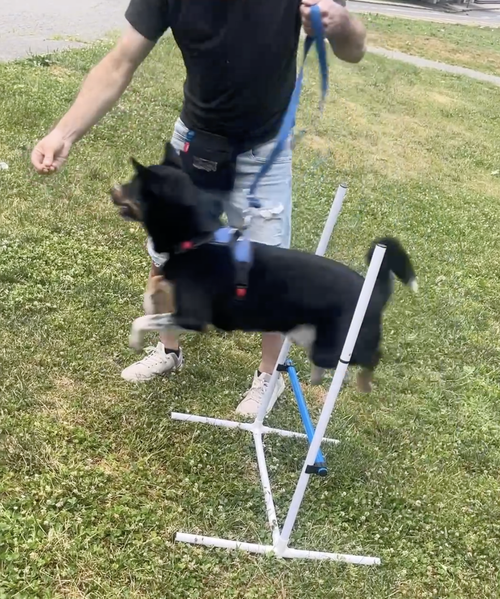
Trainer guiding a young dog through beginner agility foundation work in NYC
Foundation Work Positive Reinforcement Puppy-Safe
Early Skills That Actually Matter

For puppies, the goal is not flashy sequences. The goal is a dog who learns how to move, think, recover, and work with you. Those are the foundations that make later agility cleaner and everyday life easier.

Good Candidates

Is Puppy Agility Right for Your Dog?

Puppy agility can be a great fit for a wide range of young dogs. It tends to work especially well for:

Curious puppies who enjoy movement, food, toys, or problem-solving
Energetic puppies who need a more organized outlet than random chaos laps
Puppies who would benefit from confidence-building work around novelty
Owners who want a fun, structured activity that also teaches real skills
Teams interested in future agility or simply better movement and focus

Not every puppy is ready for the same format right away. Some puppies need more one-on-one preparation, more reinforcement skills, or a gentler introduction to group training. Emotional readiness matters.

We would rather help you start in the right place than pretend every puppy should slot neatly into the same setup. That is better for the puppy, better for learning, and much less dramatic for everyone involved.

NYC Context

Why Puppy Agility Can Be Especially Helpful for NYC Dogs

Raising a puppy in New York City is not a low-distraction lifestyle. Puppies are exposed to crowds, movement, noise, elevators, lobby traffic, narrow sidewalks, delivery carts, bikes, strollers, and the general emotional atmosphere of urban life. Many young dogs benefit from structured outlets that help them organize themselves instead of simply reacting to everything.

Puppy agility foundation training gives city dogs a way to build focus, body awareness, and adaptability in a context that is playful but still highly structured. That combination can make everyday life easier because the puppy is learning how to engage with you, recover from novelty, and work through mild challenge in a controlled way.

Better Focus Around Busy Environments
Puppy agility builds the habit of orienting to the handler during movement and mild excitement, which is useful in exactly the kinds of situations NYC puppies face daily.
More Confidence in Novel Urban Situations
Puppies who practice structured challenge often cope better with novelty later because they already have a history of working through new things successfully.
A Smarter Outlet for Young City Dogs
Agility foundations give puppies a way to use both body and brain, which is often a better fit than simply trying to exhaust them physically in an overstimulating environment.
Our Method

How Our Puppy Agility Training Works

PJH Dog Training approaches puppy agility as developmental training. The focus is on helping each puppy build confidence, coordination, handler engagement, and movement skill before more advanced agility elements are even on the table.

1
Assess Readiness
We look at confidence, food motivation, focus, recovery from novelty, and general ability to participate in training without becoming overwhelmed or wildly over-aroused.
2
Build Reinforcement and Engagement
Puppies first learn how to work with their handler, take reinforcement well, and stay mentally present during short training tasks.
3
Introduce Safe Foundation Skills
We introduce low-impact movement exercises, body awareness tasks, and age-appropriate obstacle concepts that build useful early skills without unnecessary strain.
4
Progress at the Puppy’s Pace
Some puppies are confident and ready to move quickly through foundations. Others need more confidence-building, more reinforcement fluency, or a gentler rate of exposure. We do not rush.

If your puppy is not quite ready for a group setting, private preparation may be the better starting point. That is normal and often much smarter than throwing a young dog into a setting they cannot yet handle well.

Why PJH

Why Choose PJH for Puppy Agility Training in NYC

PJH Dog Training teaching beginner puppy agility foundations in NYC
CPDT-KA Certified PhD Behavioral Neuroscience Force-Free
PJH Dog Training

Puppy agility should feel fun, but it should also feel thoughtful. At PJH Dog Training, puppy foundation work is built around how young dogs actually learn and develop, not around rushing them into adult-level expectations.

Positive reinforcement only — no aversives, no forced obstacle work
Science-informed coaching grounded in behavior and development
Safe, age-appropriate progressions instead of premature intensity
Urban relevance for puppies growing up in Manhattan and across NYC
Thoughtful early training for future agility, better focus, and everyday confidence
What to Expect

What Your Puppy’s First Agility Session Looks Like

A puppy’s first session is not about proving anything. It is about seeing how the puppy responds to the environment, how they engage with their handler, what motivates them, and what kind of foundation work makes the most sense.

1
Settle and Observe
We give the puppy time to take in the environment and let us see how they process novelty rather than rushing them straight into performance mode.
2
Check Reinforcement and Engagement
We assess whether the puppy can work for food or play, orient to the handler, and recover from distraction well enough to learn productively.
3
Introduce Foundation Tasks
Puppies may work on targeting, following, low-impact movement games, platform work, or introductory obstacle concepts depending on readiness.
4
Debrief and Next-Step Planning
You leave with a clear recommendation about fit, progression, and whether class or private support is the better next move.
Get Started

How Our Puppy Agility Training Works

Puppy agility works best when the process is clear, gradual, and honest about readiness. Here is the basic progression:

1
Initial Evaluation
We assess whether the puppy is ready for this format and what level of structure or support they need to succeed.
2
Foundation Building
Engagement, reinforcement fluency, body awareness, and early movement skills are built first.
3
Safe Obstacle Concepts
Puppies begin learning age-appropriate obstacle ideas and confidence-based movement tasks without being pushed into advanced sport demands.
4
Progression Toward Future Training
As the puppy matures, stronger early foundations can support future agility training, better focus, and cleaner communication.
Frequently Asked

Puppy Agility Training NYC — FAQs

Yes, when they are designed appropriately. Safe puppy agility classes focus on foundations, confidence, body awareness, and low-impact movement work rather than repetitive jumping, full-height obstacles, or advanced sequences too early.
Many puppies can begin age-appropriate agility foundation work around 4 months of age, depending on the individual dog’s confidence, focus, and developmental readiness. Early work should emphasize low-impact foundations rather than advanced obstacle demands.
No. Puppy agility should not center on full-height jumps or physically demanding adult-level equipment too early. Young dogs work on safe foundations, body awareness, and introductory obstacle concepts that respect developing bodies.
Puppy agility focuses more on developmental foundations: confidence, body awareness, handler engagement, movement skills, reinforcement fluency, and low-impact obstacle exposure. Regular agility classes for mature dogs may include more advanced handling and full equipment use.
Yes. When introduced thoughtfully, puppy agility can help shy or environmentally sensitive puppies build confidence by approaching movement challenges gradually and successfully.
Absolutely. Puppy agility gives energetic young dogs a structured outlet that combines movement, thinking, and teamwork rather than relying only on physical exercise.
Not necessarily. Formal obedience is not required, but basic engagement, the ability to take reinforcement, and some capacity to work with the handler in a training environment are helpful.
Puppies may learn targeting, body awareness games, low-impact obstacle familiarity, introductory tunnel work, platform work, handler focus, simple directionals, and confidence around movement and novelty.
NYC puppies often need structured outlets that build confidence, focus, and adaptability in stimulating environments. Puppy agility supports body awareness, problem-solving, and handler connection in a way that can make city life easier.
A puppy is often ready if they can take food, engage with their handler, recover reasonably from novelty, and participate safely in the training environment. Puppies who are very fearful or extremely over-aroused may benefit from private preparation first.
Yes. PJH Dog Training offers puppy agility and foundation training in Manhattan and across NYC. See our Manhattan agility page for neighborhood-specific information.

Get Started with Puppy Agility Training in NYC

Whether your goal is confidence, better focus, future agility, or simply a thoughtful outlet for a young dog, strong foundations matter. If you are not sure where your puppy should start, we can help.