Private In-Home Dog Training NYC
A customized, force-free behavior-change program run in your real environment — your apartment, your building, your block. Not a guest lecture; a structured plan built around your dog and your city life, drawing on a doctorate in behavioral neuroscience, not a weekend course.

Why Private In-Home Dog Training in NYC Is Different
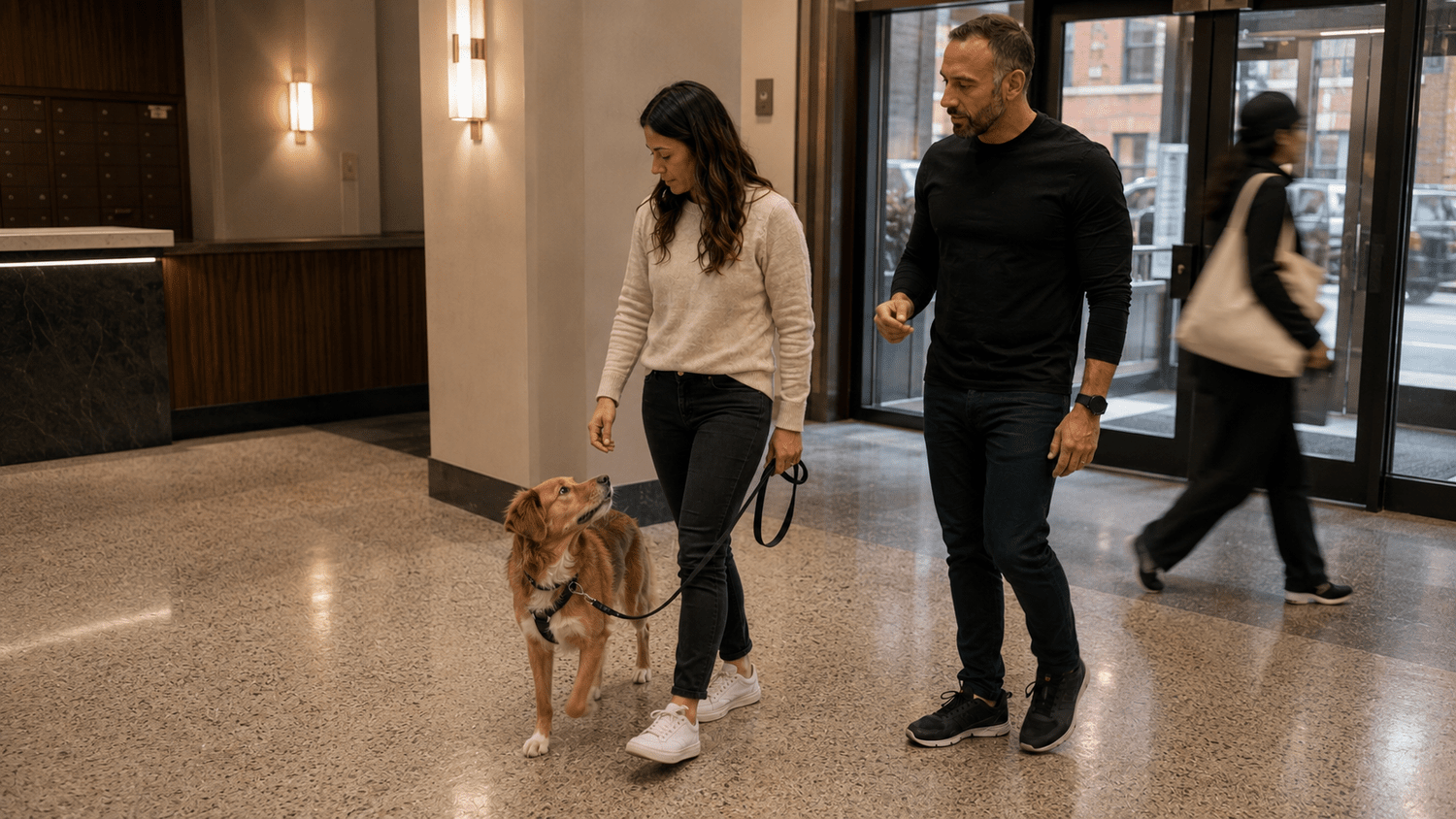
Your dog doesn’t live in a training facility. It lives in a Manhattan apartment — where it has to ride elevators with strangers, greet building staff without losing its mind, dodge cyclists on the sidewalk, and follow the unwritten social rules of shared-building life. A trainer who ignores all of that isn’t really training your dog. We train in the exact place the behavior actually happens. And your dog’s case isn’t handed from an intake person to a junior trainer — I personally assess it, design the plan, and do the training with you.
What Private Dog Training in NYC Actually Includes
This isn’t a drop-in where someone demonstrates a few exercises and disappears. It’s a structured behavior-change program — think of it as a semester, not a guest lecture.
Behavioral Assessment
Session one starts by watching your dog in its real environment to understand what’s actually driving the behavior.
A Custom Written Plan
The bulk of your training plan is written in advance and tailored to your dog, your goals, and your building.
In-Home Coaching Sessions
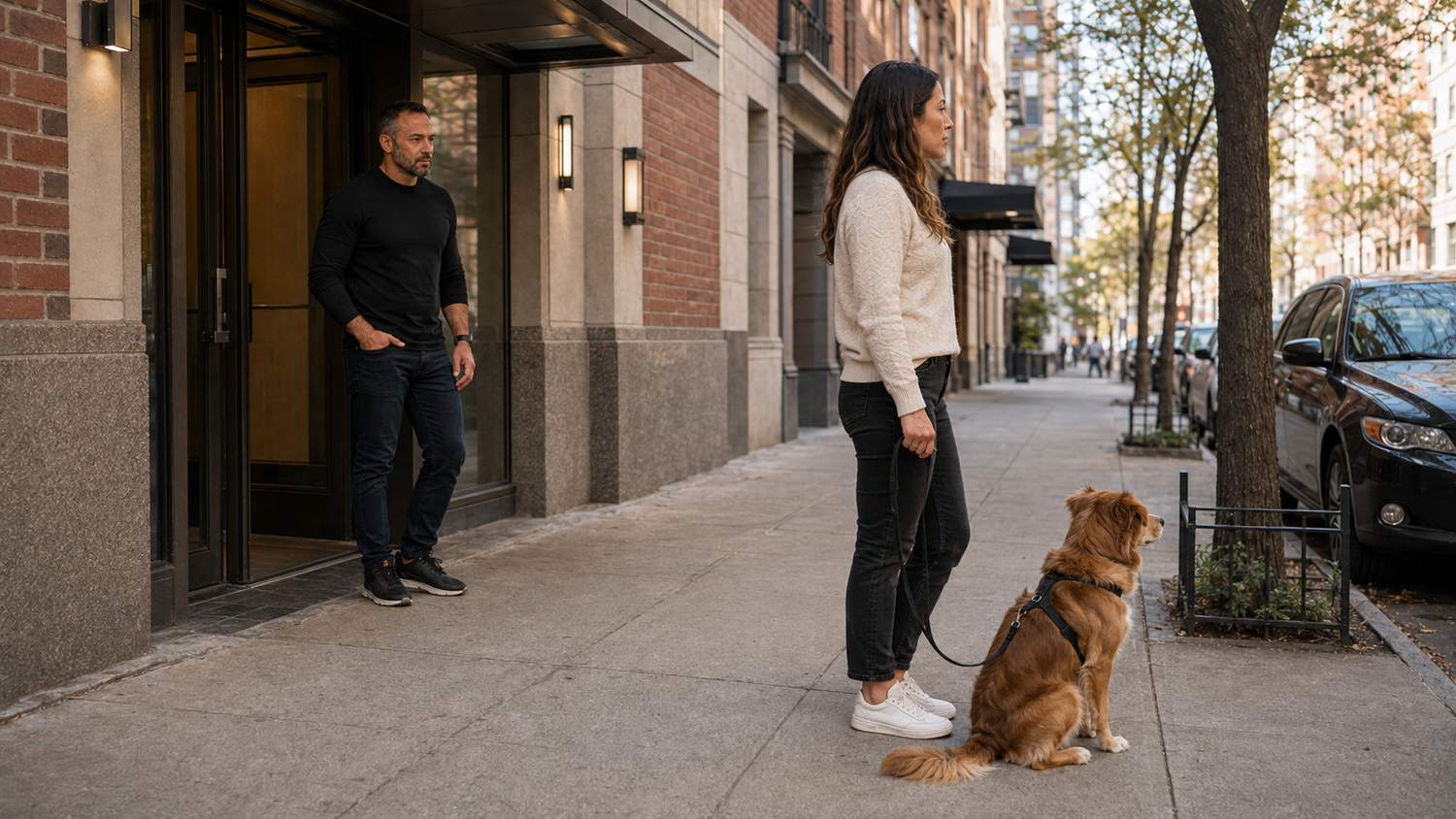
Hands-on sessions in your apartment and on your block — the places your dog needs to succeed.
Owner Coaching
We coach the humans too, so the results hold between sessions and become permanent habits.
Real-World Proofing
Skills are practiced against actual city distractions — elevators, lobbies, sidewalks, and dogs.
Between-Session Support
Guidance and adjustments as your dog progresses, so you’re never left guessing what’s next.

Private In-Home Training vs. Group Classes
Group classes aren’t bad — they’re affordable, social, and perfectly fine for dogs who just need basic exposure. But if your dog has specific problem patterns, reactive tendencies, or real apartment-living challenges, group classes weren’t designed for that.
Group Classes
- Affordable and social
- General curriculum for the whole group
- Great for basic exposure and manners
- Shared trainer attention
- Hard for reactive or anxious dogs
Private In-Home Training
- A plan built entirely around your dog
- Trained in your real environment
- Designed for specific behavior issues
- 1:1 attention and precise distance control
- Ideal for reactive, anxious, and apartment challenges
Private Puppy Training — Starting Right in NYC
Just brought home a puppy in NYC? The clock is ticking. The window between 8 and 16 weeks is when your puppy’s brain wires itself for how it will handle fear, confidence, and social situations for the rest of its life — what it learns to accept (or panic about) right now sticks. Private in-home puppy training builds those foundations in the exact home and neighborhood your puppy will grow up in.

What Happens in Your First Private Training Session
-
1
Consultation first
Every dog completes a consultation — virtual or in-person — where we review history, your goals, and whether private in-home training is the right fit.
-
2
Your plan is written
The bulk of your training plan is written before we meet, leaving room for the adjustments that come once I see your dog in person.
-
3
The first in-home session
We start in your real environment — assessing, adjusting the plan, and getting you and your dog moving on day one.
Neuroscience-Based, Force-Free, One-on-One
A PhD-level, CPDT-KA certified, 100% force-free program delivered in your home and neighborhood — at standard Manhattan rates, with no added travel fee.
Related Services
Private In-Home Training FAQ
Yes. We come to your apartment and neighborhood across Manhattan and train your dog in the real environment where behavior actually happens — elevators, lobbies, sidewalks, and your own home.
Yes. Every dog starts with a consultation — virtual or in-person — where we review your dog’s history, your goals, and whether private in-home training is the right fit. The bulk of the plan is written before the first session, with room to adjust once we meet your dog.
Group classes are affordable and social, and fine for basic exposure. But if your dog has specific problem patterns, reactive tendencies, or apartment-living challenges, private in-home training is a structured behavior-change program built entirely around your dog and your environment.
Yes. Working one-on-one in your real environment lets us manage distance and triggers precisely — exactly what reactive, fearful, and anxious dogs need. Ask about our Reactive Resilience Therapy program — and for a dog with a bite history or resource guarding, see our aggressive dog training.
Yes. The 8–16 week window is when a puppy’s brain is wiring itself for how it handles fear, confidence, and social situations for life. Private in-home puppy training starts those foundations right, in the home and neighborhood your puppy will grow up in.
See our training prices page for current single-session and package rates. Private in-home training is billed at standard Manhattan rates with no extended-area fee.
Start With a Consultation
Tell us what you’re hoping to change. We’ll assess your dog and build a force-free, in-home plan around your apartment, your block, and your goals.