Puppy Agility Training NYC
A thoughtful, age-appropriate introduction to agility foundations for puppies — building confidence, coordination, focus, and teamwork through positive reinforcement. Safe foundations first, never advanced sport work too early.

Foundations first — not full courses and full-height jumps
When people hear “puppy agility classes,” they often picture baby dogs running full courses and launching over jumps. That’s not what thoughtful puppy agility should look like. Puppy agility is about foundations: confidence, coordination, focus, movement skills, handler communication, and safe, low-impact obstacle exposure.
In practical terms, puppy agility training in NYC gives a young dog structured learning that builds curiosity instead of pressure. Those skills support future agility, but they’re just as useful for everyday city life. It’s the same science-based foundation behind our dog agility training in NYC — scaled down and made age-appropriate for puppies.
Best fit for:
- Curious puppies who love movement, food, or toys
- Energetic young dogs who need a structured outlet
- Shy puppies who’d benefit from confidence work
- Teams interested in future agility or just better focus
- Puppies 6 months and older, developmentally ready
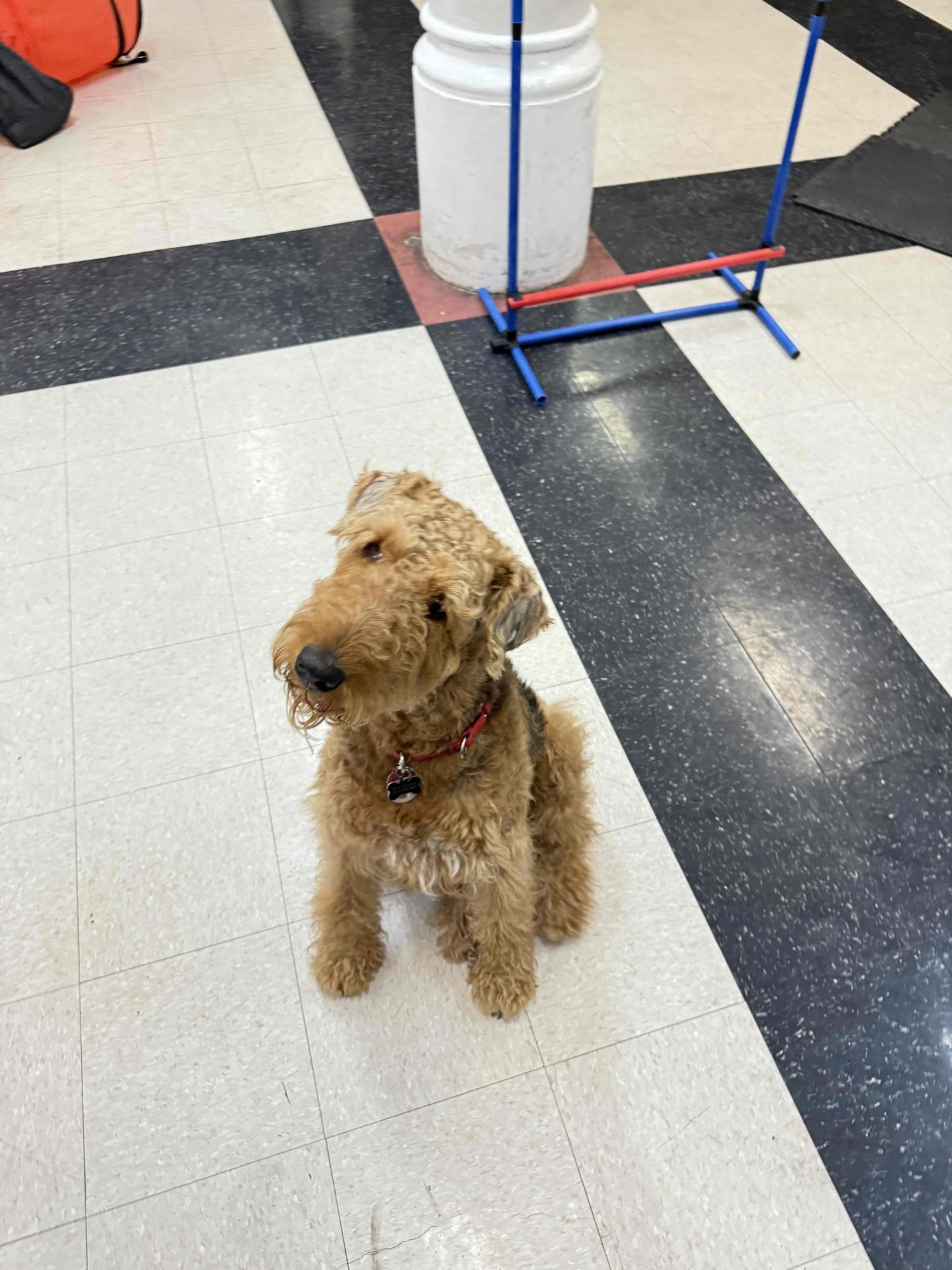
Safe, age-appropriate foundations for developing puppies
Puppies are still physically and emotionally developing, so good puppy agility respects growing joints, growth plates, attention span, and recovery ability. We use low-impact progressions and clean reinforcement matched to each puppy’s stage — not repetitive jumping or advanced sequences too soon.
The long-term payoff is simple: a puppy who learns well now is far more likely to become a confident, coordinated adult dog later.
How puppy agility builds confidence, focus, and body awareness
Puppy agility does more than entertain. It helps young dogs learn to move thoughtfully, engage with their handler, and approach challenge with curiosity instead of avoidance — a combination that’s especially valuable for NYC puppies.
- 01 Confidence Puppies master new movement tasks in a structured way, building resilience so novelty feels less threatening.
- 02 Body awareness Ground work, targets, platforms, and movement games help puppies become coordinated and aware of their bodies.
- 03 Focus & teamwork Puppies learn to stay connected to their handler during movement and mild excitement — the root of self-control.
A great fit for many young dogs — but not a one-size-fits-all class
Puppy agility works for a wide range of young dogs: curious puppies who enjoy movement and food, energetic puppies who need a more organized outlet than chaos laps, and shy puppies who’d benefit from confidence work around novelty.
But not every puppy is ready for the same format right away. Some need more one-on-one preparation or a gentler introduction to group training first. We’d rather help you start in the right place — that’s better for the puppy, better for learning, and much less dramatic for everyone. If a group isn’t the fit yet, in-home puppy training is often the smarter first step.
What we won’t do
- No full-height jumps or advanced sport work too early
- No repetitive, high-impact jumping on growing joints
- No forcing a puppy through overwhelming novelty
- No shock, prong, or fear-based handling
- No pretending every puppy fits the same setup
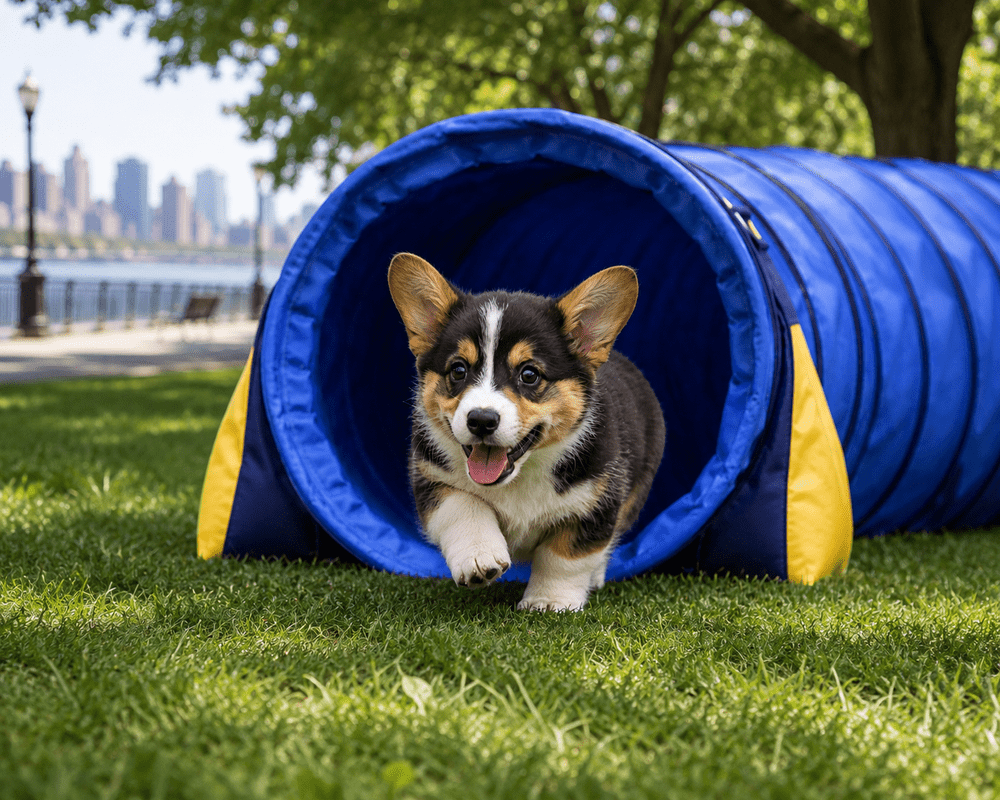

How our puppy agility training works
We approach puppy agility as developmental training — helping each puppy build confidence, coordination, and handler engagement before any advanced elements are on the table. We progress at the puppy’s pace, never rushing.
- 01 Assess readiness We look at confidence, food motivation, focus, and recovery from novelty — can the puppy participate without becoming overwhelmed?
- 02 Build engagement Puppies first learn to work with their handler, take reinforcement well, and stay present during short training tasks.
- 03 Safe foundation skills Low-impact movement, body-awareness tasks, and age-appropriate obstacle concepts that build real skills without strain.
- 04 Progress at their pace Confident puppies move quickly; others need more confidence-building or a gentler rate of exposure. We don’t rush.
Explore PJH agility & puppy programs
Puppy agility is one piece of the picture. Here’s where to go next as your young dog grows.
Dog Agility Training NYC
The full agility program for adult and adolescent dogs — what puppy foundations build toward. View page → Live cohortsAgility Class Schedule
Current agility and nose work cohorts with live spot counts and start dates. View page → OutdoorOutdoor Agility · UWS
Outdoor agility cohorts in Central Park and Riverside Park — real parks, real distractions. View page → Before you startHow to Prepare for Agility
The pre-class checklist — vet check, cue clarity, motivation, and home setup. View page → FoundationsIn-Home Puppy Training
Potty training, biting, socialization, and the engagement skills that prep a puppy for agility. View page → EnrichmentNose Work / Scent Work
Low-impact mental enrichment and confidence-building — a great complement for young dogs. View page → PricingTraining Prices
Clear, all-inclusive pricing for evaluations, private foundations, and classes. View page → LocationsAreas We Serve
Manhattan, Brooklyn, and Queens neighborhoods we cover — plus virtual citywide. View page → AboutAbout Pepe Hernandez
CPDT-KA certified, with a PhD in behavioral neuroscience — the science behind the foundations. View page →Common questions about puppy agility in NYC
What is puppy agility training in NYC?
Puppy agility training in NYC is a safe, age-appropriate introduction to agility foundations for young dogs. Instead of full-height jumps or advanced sequencing, puppy agility classes focus on body awareness, confidence, handler engagement, low-impact obstacle exposure, and simple movement skills that prepare puppies for future learning.
Are agility classes safe for puppies?
Yes, when they’re designed appropriately. Safe puppy agility classes focus on low-impact foundation work rather than repetitive jumping, full-height obstacles, or physically demanding sport sequences. The goal is to build coordination, confidence, and movement skills while respecting developing joints and growth plates.
What age can puppies start agility training in NYC?
Our puppy agility classes are for puppies 6 months or older. Younger puppies are better served by gentle puppy training foundations first; structured agility-style movement work begins once a puppy is developmentally ready, around 6 months, and always stays low-impact to protect growing joints and growth plates.
Do puppies jump full-height obstacles in agility class?
No. Puppy agility training should not center on full-height jumping or advanced sport equipment too early. Young dogs work on safe foundations, low-impact movement exercises, and obstacle exposure that is appropriate for their age and physical development.
How is puppy agility different from regular dog agility classes?
Puppy agility focuses more heavily on developmental foundations such as body awareness, confidence, focus, targeting, handler movement, and low-impact obstacle exposure. Regular agility classes for mature dogs may include more advanced handling, larger obstacle sequences, and full equipment use.
Is puppy agility good for shy or anxious puppies?
Yes. Puppy agility foundation work can be especially helpful for shy or environmentally sensitive puppies because it builds confidence through gradual, successful exposure to new movement challenges and training tasks. The emphasis is on curiosity and success, not pressure.
Can energetic puppies benefit from agility foundations?
Absolutely. Puppy agility gives energetic young dogs a structured outlet that combines movement, thinking, and teamwork. It’s often more productive than simply trying to tire a puppy out physically, because it teaches self-control and focus at the same time.
Does my puppy need obedience before starting agility?
Not necessarily. Formal obedience isn’t required, but puppies do benefit from basic engagement, the ability to take reinforcement, and some capacity to work with their handler in a training environment. Some puppies may benefit from preparatory work before joining a group format.
What do puppies learn in agility foundation training?
Puppies may learn body awareness games, handler focus, targeting, low-impact obstacle familiarity, introductory tunnel work, platform work, reinforcement skills, simple directionals, and movement confidence. These skills support both future agility training and everyday life with a young dog in NYC.
Why is puppy agility helpful for NYC dogs?
NYC puppies often need structured mental and physical outlets that build confidence, focus, and adaptability in stimulating urban environments. Puppy agility supports body awareness, problem-solving, and handler connection in a way that can make city life easier for both dog and owner.
How do I know if my puppy is ready for a class?
A puppy is often ready for an introductory class if they can take food, engage with their handler, recover reasonably from novelty, and work safely around the training environment. Puppies who are very fearful, shut down easily, or become highly over-aroused may benefit from private preparation first.
Do you offer puppy agility training in Manhattan?
Yes. PJH Dog Training offers puppy agility and foundation training in Manhattan and across NYC, with location and format depending on the puppy’s needs, the season, and the program structure. For outdoor options, see our outdoor agility classes on the Upper West Side.
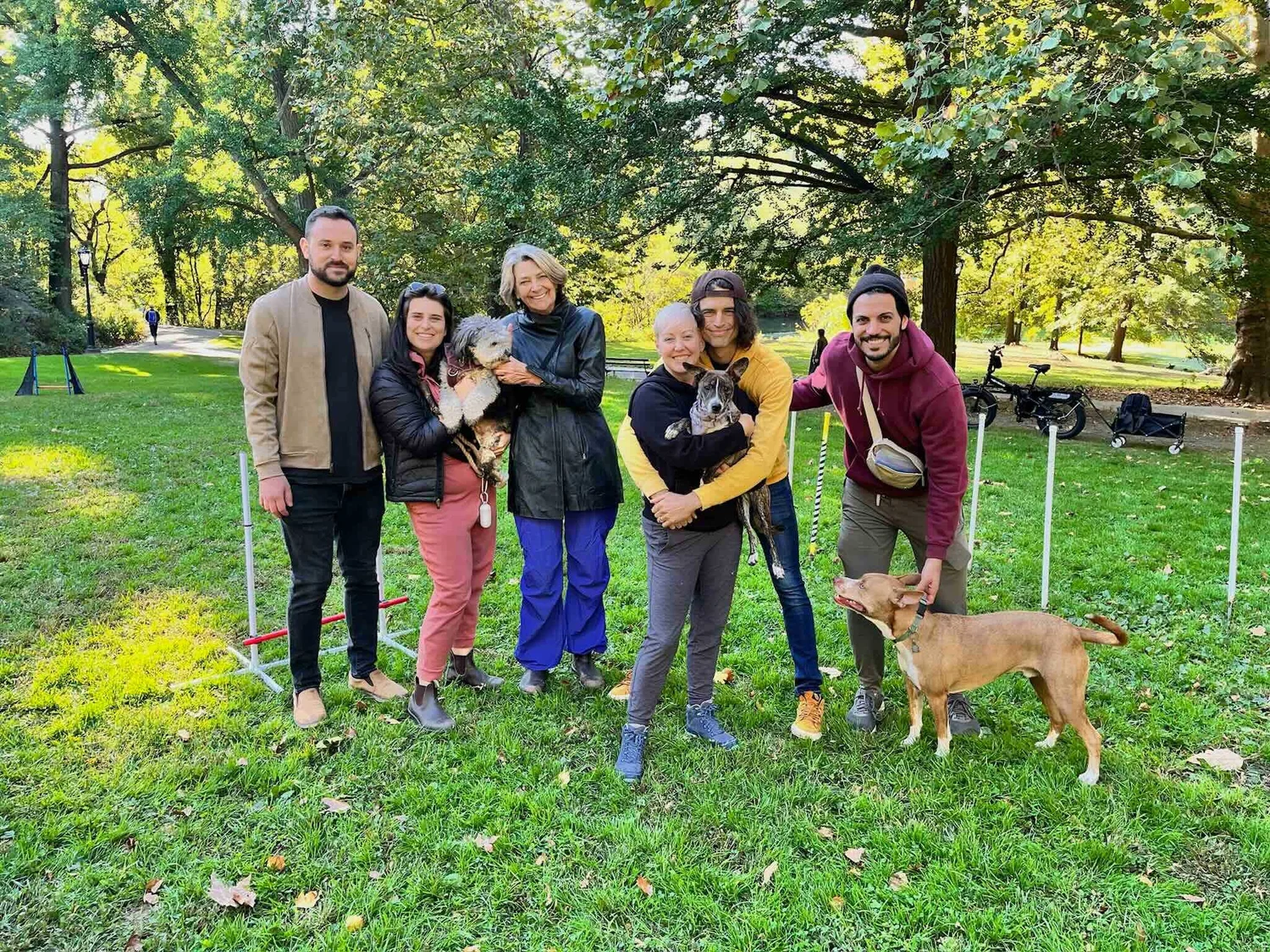
Give Your Puppy the Right Start
Start with a puppy agility evaluation. We’ll assess your puppy’s confidence, focus, and readiness, then build a safe, force-free foundation plan that fits their stage — and sets up a confident, coordinated adult dog.