Puppy Socialization Classes in NYC
Guided puppy socialization classes NYC families can join on demand. Small, moderated groups built for confidence, calm greetings, recovery skills, and the real pressures of city life.
What puppy socialization means in NYC
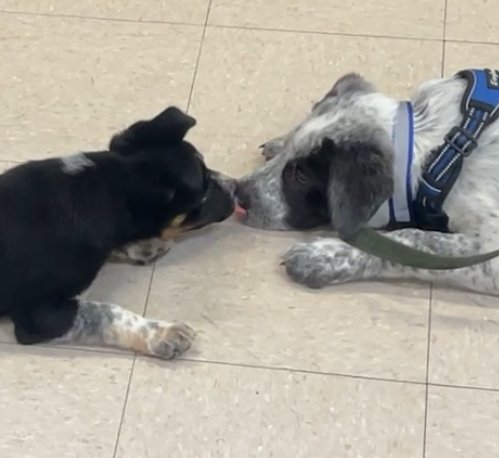
Puppy socialization is not “play with every dog.” It is guided exposure that helps a puppy learn how to process novelty, recover from stimulation, and stay functional in the real world. The goal is a puppy who can stay composed, take in information, and choose calm behavior — not a puppy who has met the most dogs.
In NYC, that matters even more. Puppies are exposed early to elevators, sidewalks, delivery carts, noise, strangers, dogs, motion, and abrupt environmental change. Socialization done well builds resilience through controlled exposure and deliberate recovery practice.
On-demand cohorts — join the waitlist
This class runs as small on-demand cohorts. Once 5 teams join the waitlist, a new cohort opens and everyone on the list is contacted by email with dates, location, and next-step details. Groups stay small so every puppy gets attention and moderated interactions.
1. Join the waitlist
Fill out a short form with your puppy’s age, vaccinations, and any specific goals.
2. Cohort opens at 5 teams
When the list hits 5, we open a new cohort and coordinate scheduling with everyone by email.
3. Meet, learn, socialize
Small, moderated sessions with structured greetings, recovery breaks, and hands-on coaching.
What happens in our puppy socials
Structured greetings
Short, appropriate interactions with breaks — not endless free play.
Recovery practice
Calm observation and disengagement so puppies learn how to come down from arousal.
City exposure
Novelty, handling, movement, sounds, and controlled introductions to real-world stimulation.
Owner coaching
Real-time reading of body language, thresholds, and when to intervene.
Confidence over chaos
Shy puppies are protected. Bold puppies learn appropriate off-switches.
Safety-first structure
Small groups, health checks, moderated interactions, and rest between sessions.
Manhattan-specific socialization
Most puppy classes teach dogs to be comfortable in a quiet training hall. That doesn’t transfer to crowded sidewalks, sudden noises, scooters, delivery bikes, elevators, and constant dog traffic. Manhattan puppies need resilience with controlled exposure and recovery practice — not just play.
Success here depends on teaching puppies how to remain calm, responsive, and confident in high-distraction environments — the kind of environment they will actually live in for the rest of their life.

More than a puppy playgroup
A puppy playgroup is unmoderated free play. A puppy social is guided, coached, and structured. We shape short, appropriate interactions, watch body language, and use breaks to practice recovery. Free play alone can teach puppies to overarouse; structured socials teach them how to greet, disengage, and stay calm.
If your puppy is not ready for a group yet, or you want faster foundations in your own home first, start with in-home puppy training and layer in socials when the timing is right. For structured skill work, puppy obedience classes complement the social side.
Manhattan neighborhoods
Our puppy socials are based on the Upper West Side and serve families across Manhattan.
Puppy socialization classes FAQ
Is this just a puppy playgroup?
No. Every session is moderated by a trainer. We shape short, appropriate interactions, watch body language, coach owners in real time, and use breaks to practice recovery. Free play alone can teach puppies to overarouse — structured socials teach them how to greet, disengage, and stay calm around other dogs.
What is puppy socialization?
Puppy socialization is guided exposure that helps a puppy learn what the world is, how to cope with novelty, and how to recover. It is not simply “play with every dog.” Good socialization builds confidence, resilience, and neutrality — a puppy who can process new sights, sounds, people, and dogs without becoming overwhelmed.
When should I start socializing my puppy?
As early as safely possible. There is a short developmental window — generally up to about 4.5 months of age — during which a puppy’s brain is actively learning what is safe, familiar, and worth engaging with. Waiting until after all vaccinations are complete usually means missing that window.
Can I socialize my puppy before they are fully vaccinated?
Yes, with sensible precautions. Puppies can begin controlled socialization with healthy, vaccinated puppies in clean environments before all shots are complete. The greater behavioral risk to most puppies is under-socialization, not exposure. We follow AVSAB guidelines and require rabies for group participation.
What vaccines are required for group puppy socials?
Rabies vaccination is required for group participation. Puppies partway through their DHPP series are welcome, provided they are healthy and their vet has cleared safe controlled exposure. If your puppy is not ready for a group yet, private in-home puppy training is a good starting point.
What if my puppy is scared or shy?
Shy puppies are often the strongest candidates for guided socialization. We avoid flooding, prevent unwanted pressure from other puppies, and use distance, choice, and controlled exposure to build confidence at your puppy’s pace. Nothing is forced.
How can I make socialization a positive experience?
Short sessions, pleasant outcomes, and lots of recovery. Aim for calm exposure rather than long, high-intensity play. Reward voluntary engagement, give the puppy the ability to move away, and never push through fear. In class we coach you through this in real time.
How does the on-demand waitlist work?
The class runs as small on-demand cohorts. Once five teams are on the waitlist, a new cohort opens and everyone on the list is contacted by email with dates, location, and next-step details. This keeps groups small and manageable.
Should we also do puppy obedience?
Socialization and obedience are complements, not competitors. Socialization builds emotional development — how your puppy feels about the world. Obedience builds practical skills — sit, stay, recall, leash manners. Most families benefit from both, and many combine group socials with a private in-home training package or puppy obedience.
Why is my puppy chewing everything?
Chewing is a normal, healthy behavior — puppies explore with their mouths and need to chew during teething. Redirect to appropriate chew outlets, rotate toys to keep them novel, and manage the environment so household items are not available. Persistent destructive chewing in an adolescent dog often signals under-stimulation, not misbehavior.
How do I stop my puppy from jumping on people?
Puppy jumping is an attention-seeking greeting that gets stronger every time it works. Teach a four-on-the-floor alternative — sit or stand — and reinforce that consistently. Instruct household and visitors to ignore jumping and reward calm approaches. In our socials, calm greeting is one of the first skills we shape.
How do I handle separation anxiety in a puppy?
Build alone-time as a skill from day one. Very short, calm departures, gradual duration increases, enrichment during separation, and a predictable routine all help. If a puppy is genuinely distressed — panic, destruction, or extreme vocalization — a separation anxiety assessment is worthwhile before habits set in.
Join the waitlist for the next puppy social cohort in NYC
Guided, structured, small-group puppy socialization for real NYC life — confidence, recovery, and calm greetings.