Adolescent Obedience Training NYC
Structured, positive-reinforcement obedience for the teenage phase — loose-leash walking, reliable recall, polite greetings, and calm focus for busy city life. Small group classes on the Upper West Side. Interest list now open for Adolescent Obedience I — class dates & times TBD.
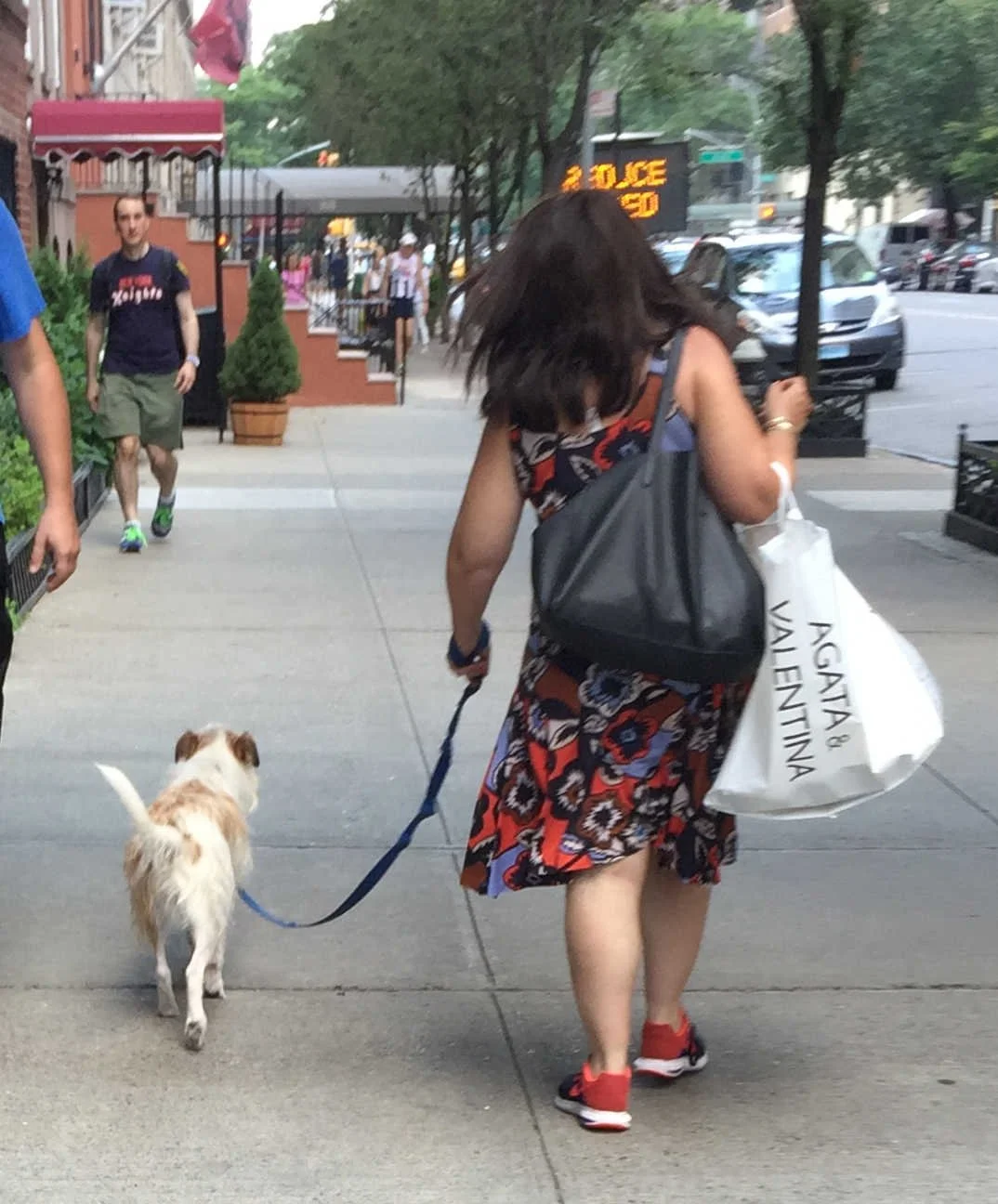
The sweet puppy “forgot” everything — that’s adolescence
Somewhere around 4.5 to 6 months, the biddable puppy you raised starts testing boundaries: pulling on leash, jumping on everyone, barking, and tuning you out mid-cue. It isn’t defiance — it’s a normal developmental stage that lasts until 18–24 months, and it’s the make-or-break window for lifelong manners.
Left alone, these habits harden. Caught now, they’re highly trainable. Our positive-reinforcement classes on the Upper West Side turn the teenage phase into the foundation for a calm, well-mannered adult — built for the sidewalks, elevators, and cafes your dog actually lives in.
Sound familiar?
- Pulling hard on leash, again
- Jumping on people at the door and on the street
- “Selective” hearing — recall that used to work
- Barking and overexcitement around dogs
- Can’t settle in stimulating places
What to do when your adolescent dog stops listening to you
It’s the number-one thing owners of teenage dogs tell us: “She used to listen — now she ignores me.” It isn’t spite, and it isn’t too late. Adolescence temporarily rewires your dog’s brain, and solid cues wobble right when the world gets more exciting. Here’s what actually helps.
- 01 Don’t take it personally A teenager testing boundaries is normal, not defiant. Punishing the “ignoring” only teaches your dog that you’re not safe to listen to.
- 02 Go back to basics — and pay well Re-teach known cues in easy rooms with high-value treats. Reliability rebuilds fast when responding is clearly worth it.
- 03 Manage so they can’t rehearse Use a leash, gates, and distance from triggers. Every ignored cue makes the next one weaker — prevent the reps you don’t want.
- 04 Lower the difficulty If your dog won’t respond, the environment is too hard. Add distance from the distraction, get the behavior, then build back up.
- 05 Out-interest the distraction Movement, play, and food beat “no.” Reward the check-ins so choosing you becomes your dog’s default.
- 06 Get a plan, not just tips A structured class turns scattered practice into steady progress — exactly what the adolescent window rewards most.
What your dog learns
Every skill is chosen for real NYC life — crowded sidewalks, elevators, cafes, and dog-friendly spaces — and taught entirely with positive reinforcement.
- Loose-leash walking Calm, no-pull walks past dogs, food carts, and crowds — the skill owners want most.
- Reliable recall A “come” that holds even when something more interesting is happening.
- Polite greetings Four on the floor — no jumping on people at the door or on the street.
- Impulse control Wait, leave-it, and settle — the self-control that makes a teenager livable.
- Calm focus Attention on you in stimulating places, not scanning and reacting to everything.
- Confident socialization Appropriate play and neutrality around other dogs and unfamiliar people.
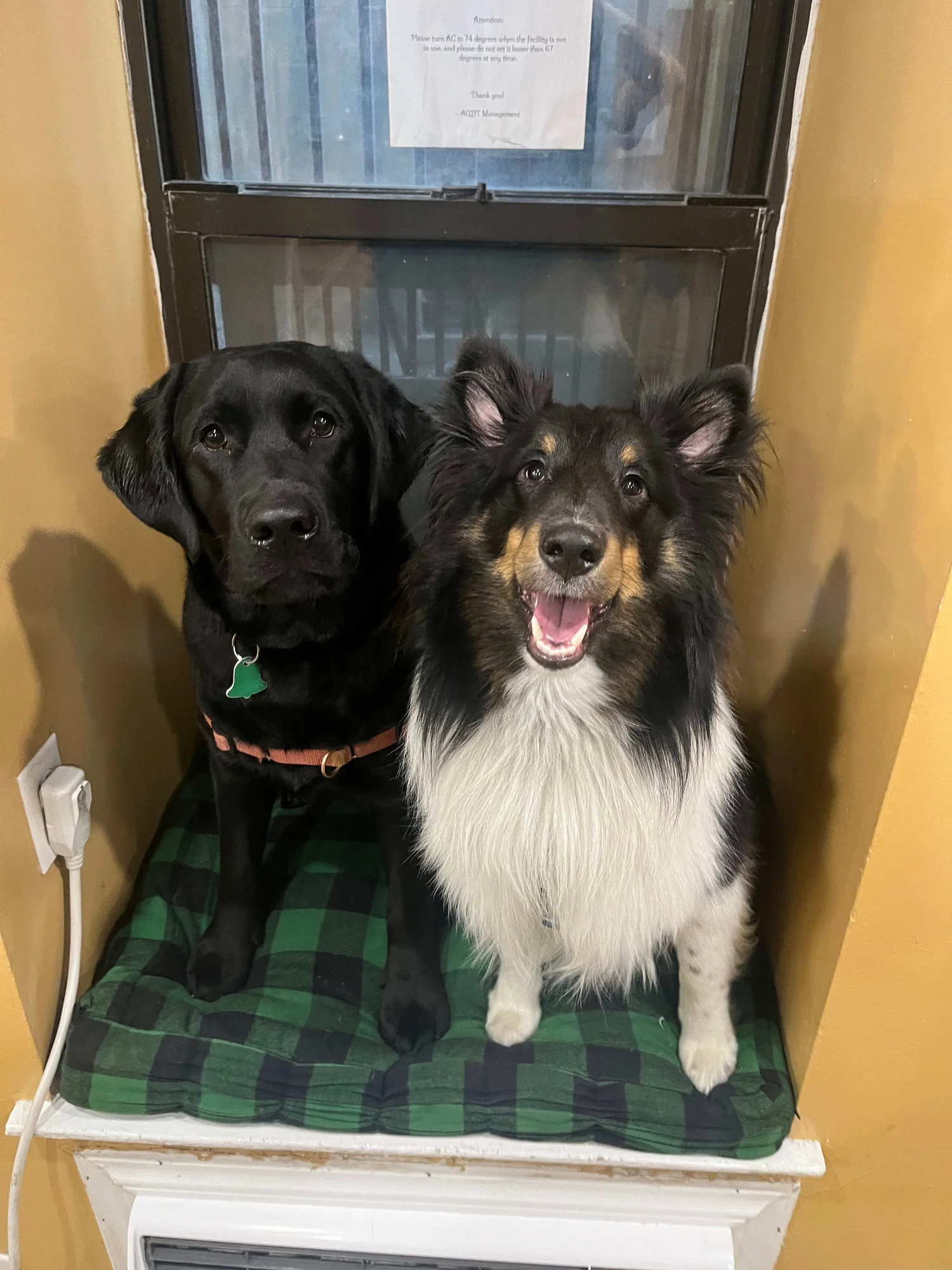
Skills that hold up on a real NYC block
A cue your dog performs in a quiet living room isn’t the same as one that holds on Broadway at rush hour. We train from the start in the environment your dog actually lives in — distractions, dogs, and all — so the skills transfer to real life.
Adolescent obedience classes on the Upper West Side
Small group classes give your dog individual coaching in a real social setting — the answer to that “adolescent dog training classes near me” search. Everyone starts with Level I.
Level I — Foundations for Success
Perfect for dogs coming out of puppy training. Level I builds the fundamentals:
- Sit, stay, and down with distractions
- Loose-leash walking to eliminate pulling
- Polite greetings — no jumping on people
- Impulse-control games to reduce overstimulation
- Socialization and confidence-building
Level II — Advanced & Real-World
For dogs who’ve finished Level I and are ready for more. Level II proofs the skills against real challenge:
- Proofing cues around heavy distraction
- Reliable recall in stimulating environments
- Calm behavior on busy NYC streets
- Duration and distance on stays
- Confidence for the real world your dog lives in
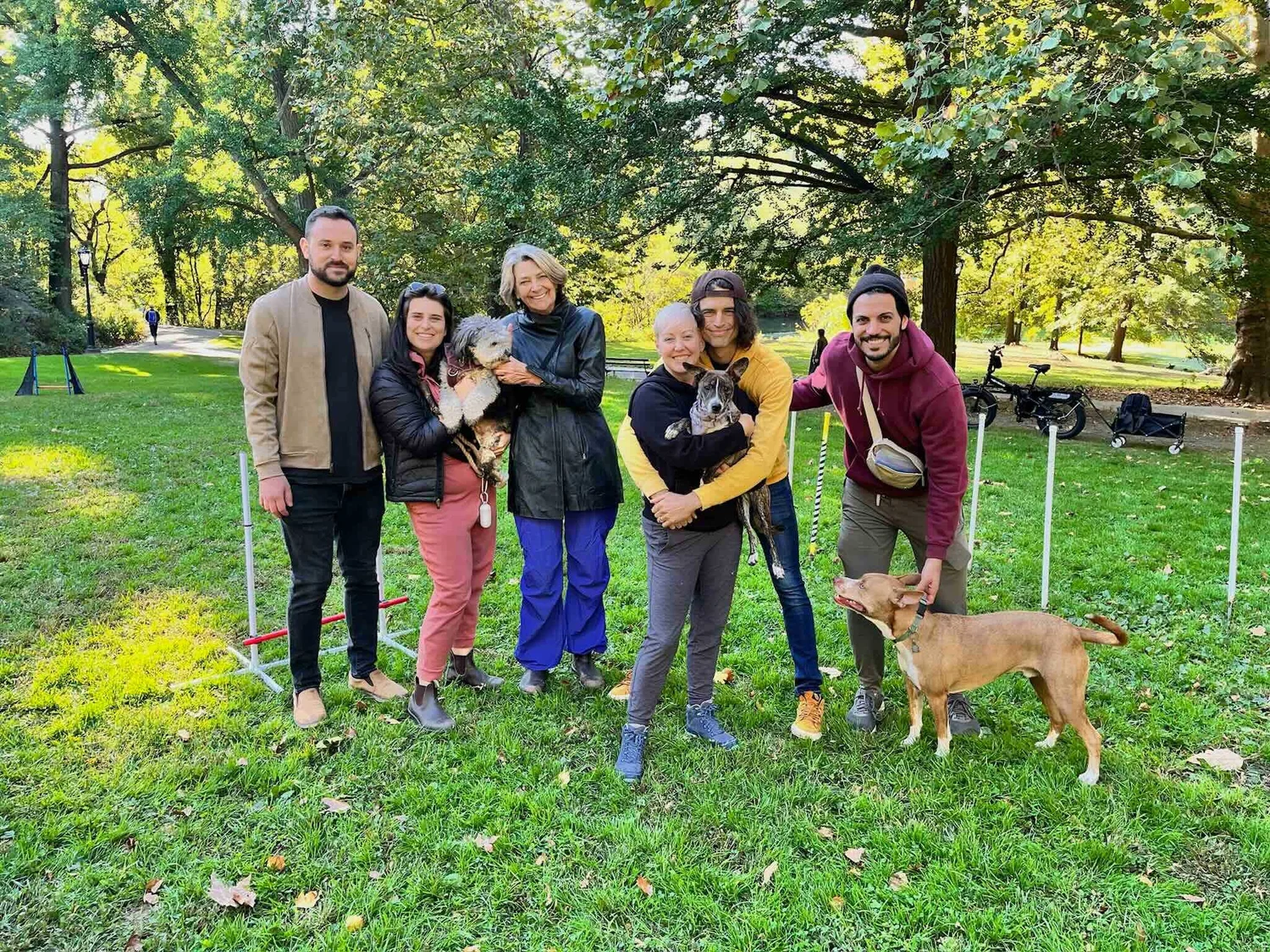
A real PJH small-group class
This is what class actually looks like — a few teams, lots of individual coaching, and dogs learning around the exact distractions they’ll meet on the street. Small by design, so every dog (and every owner) gets real, hands-on attention.
How it works
Class dates and times are still being set — here’s the simple path from interested to enrolled.
- 01 Join the interest list Add your name and email in under a minute. We’re gauging interest before locking dates.
- 02 Start with Level I We’ll notify you the moment the next Adolescent Obedience I cohort opens on the Upper West Side.
- 03 Proof it in Level II & socials Layer in distraction and real-world challenge, and add trainer-moderated socials for a confident adult.
Class essentials
Held at Advent Lutheran Church, W. 93rd St & Broadway — steps from the 96th St 1/2/3. Here’s what every cohort has in common.
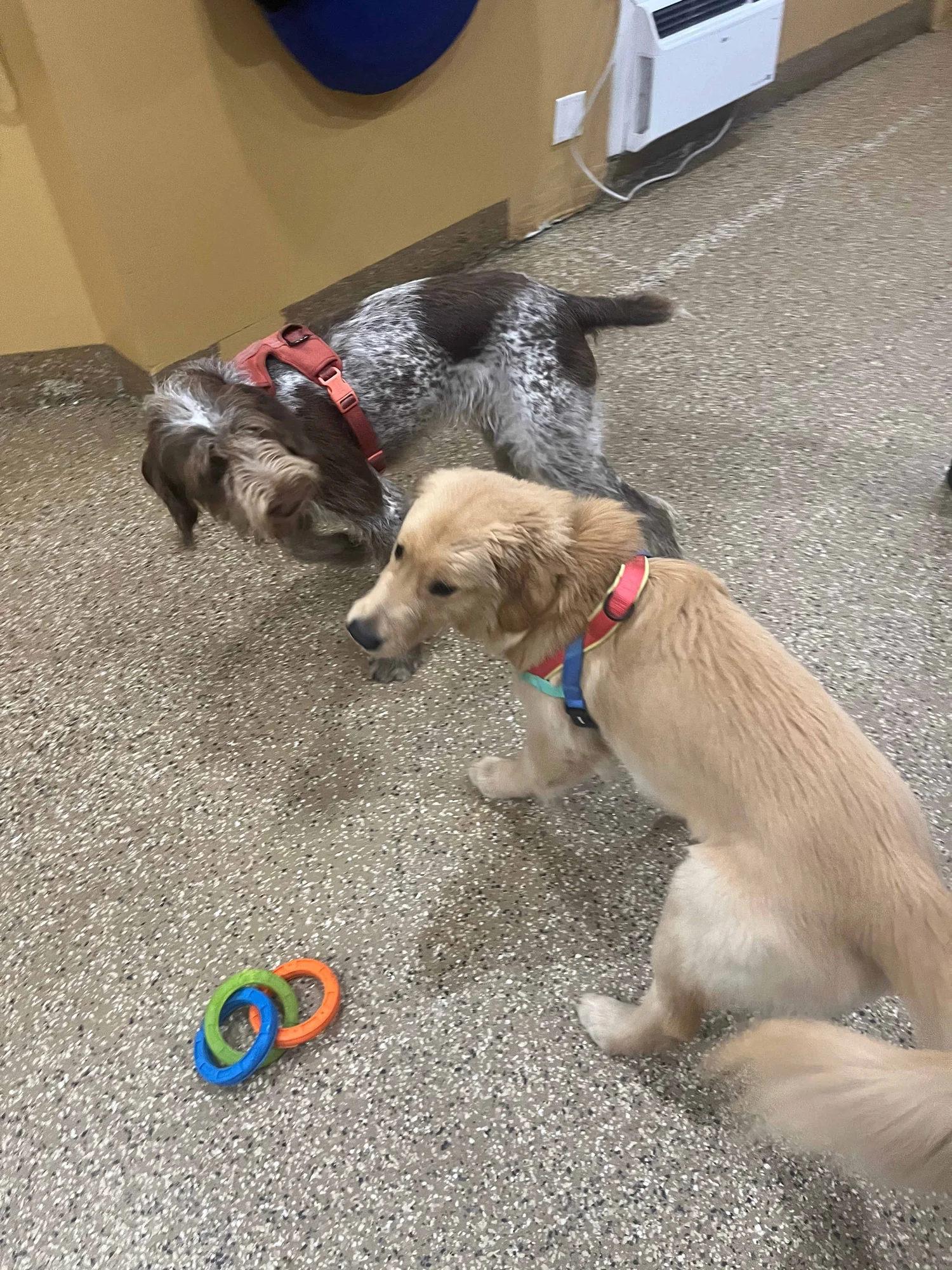
Adolescent socials
Many teenage dogs simply need more good social experience to learn how to greet and play appropriately — skills we can’t teach as humans, but other dogs can. Our trainer-moderated social hours make those interactions safe, fun, and confidence-building.
Come relax after work, set up play dates, and make friends. Pairs perfectly with Adolescent Obedience I & II. Please be ready to provide vaccination records, even if not all vaccines are finished.
Dog obedience classes near me — why PJH?
Finding dog training in NYC can be overwhelming. PJH Dog Training is led by a trainer with a PhD in behavioral neuroscience and CPDT-KA certification, running a 100% force-free program built specifically for the behaviors that make the adolescent phase hard.
With the right training now, your teenager grows into the confident, focused, well-mannered adult you pictured when you brought them home.
What sets the classes apart
- Trainers who specialize in adolescent behavior
- Small class sizes for personalized coaching
- Positive reinforcement for lasting results
- Convenient Upper West Side location
- Proven results on leash, recall & impulse control
Related programs
Adolescent obedience is one piece of the picture. Explore the programs that most often go with it.
Adolescent Day School
We train your dog while you go about your day — structured drop-off on the Upper West Side. View page → Younger dogsPuppy Obedience
Foundations for younger pups before the adolescent phase hits. View page → Early exposurePuppy Socialization
Positive early exposure to people, dogs, and the city. View page → One-on-onePrivate In-Home Training
Tailored help if your dog struggles in group settings or needs focused work. View page → BehaviorReactive Dog Training
A better starting point for dogs who bark and lunge at triggers on leash. View page → All programsDog Training Programs NYC
Browse every class and program PJH offers across the city. View page → PricingTraining Prices
Transparent class and package pricing — the number you see is the number you pay. View page → AboutAbout Pepe Hernandez
CPDT-KA certified, with a PhD in behavioral neuroscience — the science behind the method. View page →Adolescent dog training — FAQ
What age qualifies as an adolescent dog?
Adolescence in dogs typically begins around 4.5 to 6 months and lasts until 18 to 24 months, depending on the breed. During this stage, dogs test boundaries, become more independent, and develop new behavioral challenges just as their puppy manners seem to disappear.
Why has my adolescent dog suddenly stopped listening?
It’s the hallmark of adolescence. Around 6–18 months, hormonal and brain changes make dogs more independent and more distractible, so cues that were rock-solid can suddenly wobble — it looks like defiance, but it’s development. The fix is to go back to basics with high-value rewards, manage the environment so your dog can’t rehearse ignoring you, and lower the difficulty until they can succeed. It’s very trainable — and it’s exactly what these classes are built for.
How do I sign up for Adolescent Obedience I?
We’re building an interest list before scheduling — class dates & times are still TBD. Use any Join the Interest List button to add your name and email (it opens a quick Google form), and we’ll notify you the moment the next cohort opens. You can also call us at 347-934-4102 or 347-754-1988.
Where do the adolescent obedience classes take place?
Classes are held at Advent Lutheran Church on W93rd St and Broadway, in the heart of Manhattan’s Upper West Side — just steps from the 96th Street station on the 1, 2, and 3 subway lines.
How do adolescent obedience classes differ from puppy training?
Puppy training focuses on early socialization and basic cues. Adolescent obedience reinforces those foundations while tackling teenage behaviors like leash pulling, jumping, selective listening, and impulse control — all critical for busy NYC streets, subways, and dog-friendly public spaces.
What skills will my dog learn?
Loose-leash walking, reliable recall, polite greetings, impulse control, and calm behavior in stimulating public places — all taught with positive reinforcement.
What if my dog is reactive or struggles with focus?
Our classes help dogs improve focus, build confidence, and manage overexcitement in a city environment. Dogs with significant reactivity often do better starting with reactive dog training or private sessions before joining a group class.
What’s the difference between Level I and Level II?
Level I builds the foundations — sit, stay, down, loose-leash walking, and recall. Level II proofs those skills against real-world challenge, layering in distraction, duration, and distance so they hold up on busy NYC streets.
What should I bring to class?
A flat collar or well-fitting harness, a 4–6 ft non-retractable leash, soft high-value treats, and water. For socials, please bring vaccination records — even if not all vaccines are finished.
Do you offer a drop-off training option?
Yes. Our Adolescent Day School on the Upper West Side provides structured drop-off training while you go about your day.
How long does it take to see results?
Most NYC owners notice improvements within a few sessions, especially with consistent practice at home and on daily walks.
Join the Adolescent Obedience I Interest List
Class dates & times are TBD — add your name and email and we’ll notify you the moment the next Level I cohort opens on the Upper West Side.