Dog Leash Training NYC
End the pulling and teach calm, loose-leash walking that holds up on crowded city sidewalks — science-based, force-free, and taught on your real routes, not a quiet training room.
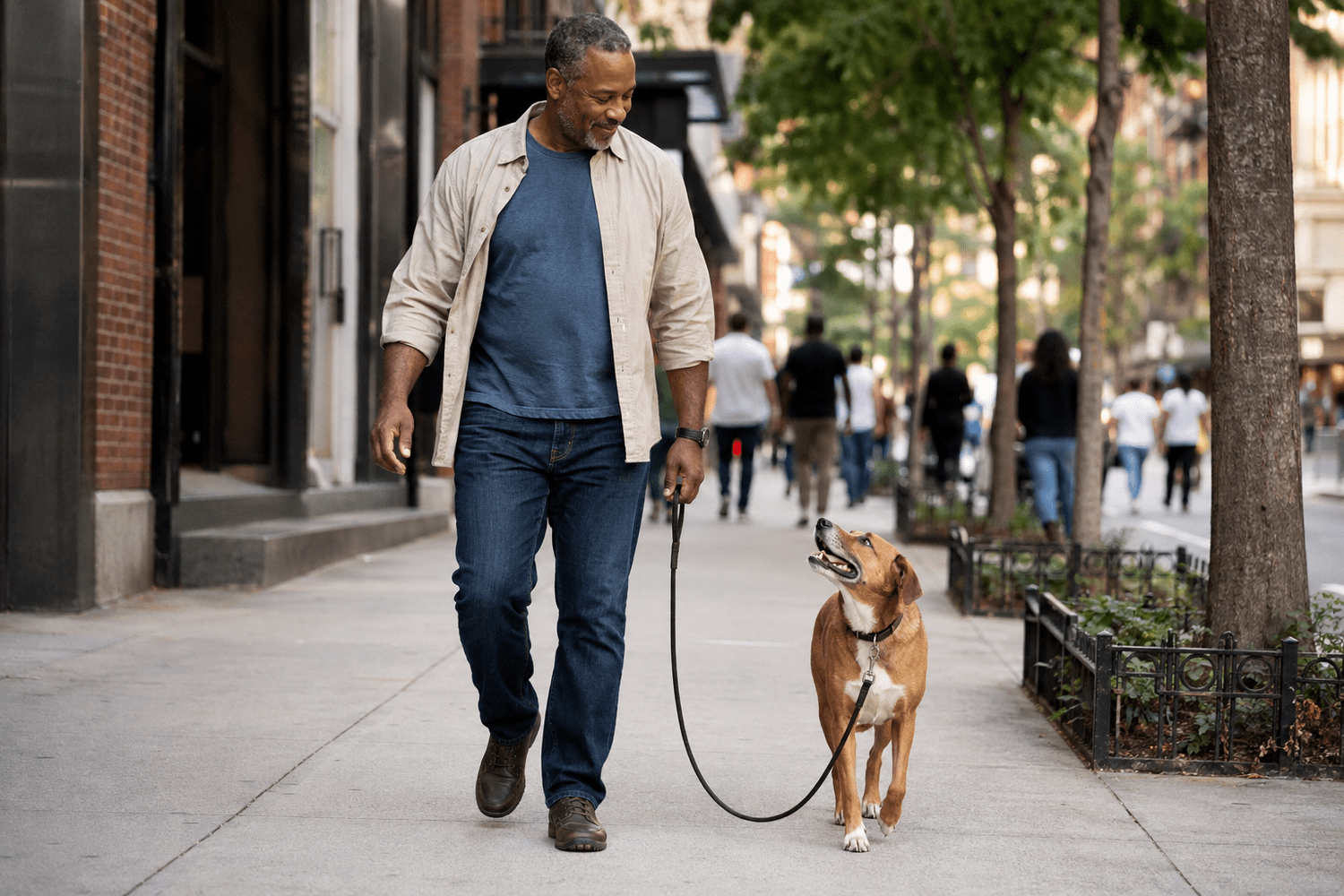
A walk that doesn’t feel like a tug-of-war
Pulling isn’t stubbornness — it’s a habit your dog has practiced thousands of times. Every time pulling moves them forward, it works, so the habit gets stronger. NYC makes it worse: every block has new smells, dogs, and destinations pulling your dog ahead.
PJH Dog Training fixes pulling the way it actually sticks — by teaching your dog that staying close to you is what gets them where they want to go. We train force-free, on your real walking routes, so the skill holds up on a busy sidewalk and not just in a quiet room. If your dog also barks or lunges at other dogs, that’s a different issue we cover in reactive dog training.
Best fit for:
- Dogs who pull, lean, or choke themselves on leash
- Walks that hurt your shoulder or feel out of control
- Strong dogs and determined city pullers
- Puppies learning to walk politely from the start
- Owners who want force-free, no-prong methods
Why NYC sidewalks are the hardest place to teach loose-leash walking
A dog who walks beautifully on a quiet street can fall apart the moment the sidewalk fills up. City leash training has to account for the environment itself — which is exactly why we train in it.
- 01 Crowds & tight space Narrow, busy sidewalks leave little room to maneuver, so a pulling dog is harder and more stressful to manage.
- 02 Endless smells Hydrants, tree pits, food carts, and other dogs make every few feet a powerful reason to lunge ahead.
- 03 Constant triggers Bikes, buses, scooters, delivery carts, and dogs appear fast and pull focus away from you mid-walk.
- 04 Curbs & crossings Busy intersections demand a dog who can wait, check in, and cross calmly — not drag you into traffic.
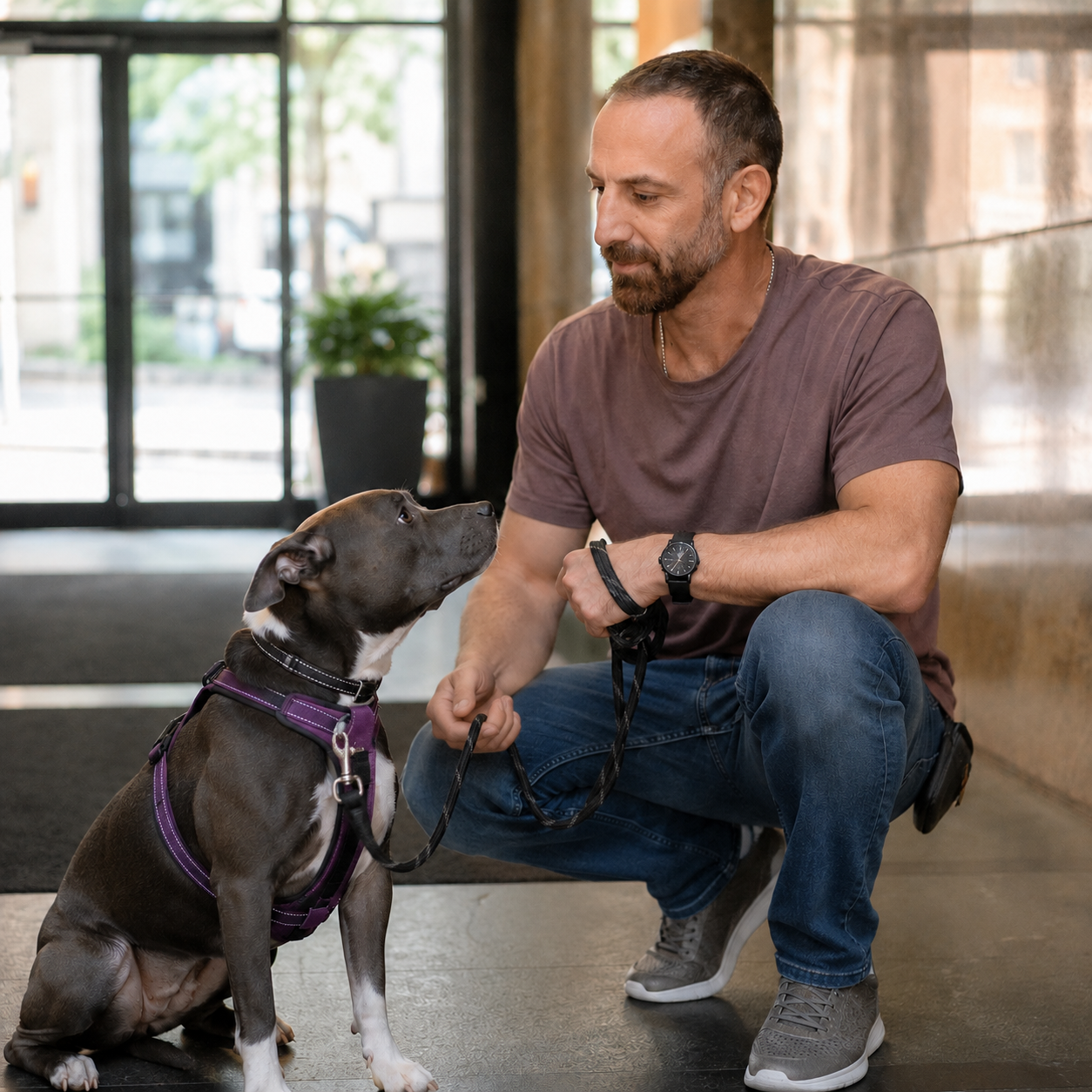
We fix the walk on the actual block you walk it
Leash skills don’t transfer well from a living room to Broadway. So we start where it’s manageable and build out to your real routes — your block, the avenue, the park entrance, the building exit — at the times you actually walk.
You learn the handling, timing, and reward mechanics yourself, so the calm walking continues long after our sessions end.
How we turn pulling into a relaxed walk
Loose-leash walking isn’t one trick — it’s a few skills layered together. We build them in order, so each one holds before we add city distractions on top.
- 01 Engagement First your dog learns that checking in with you pays off — the foundation that makes everything else on leash possible.
- 02 Loose-leash mechanics Your dog learns to keep the leash slack and move at your pace, with the handling skills and timing you need to reinforce it.
- 03 Proofing in distraction We add real city distractions gradually — dogs, smells, crossings — so the skill holds up when it actually counts.
Is it pulling — or leash reactivity?
They look similar at the end of a leash, but they’re different problems. Pulling is mechanical: your dog wants to get somewhere and leans into the leash to do it. Leash reactivity is emotional: barking, lunging, or fixating on a trigger like another dog, often from fear or over-arousal.
This page is about pulling and loose-leash walking. If your dog explodes at other dogs or people on leash, that needs behavior modification, not just walking skills — see our reactive dog training in NYC. Not sure which one you’re dealing with? A consultation sorts it out fast.
Our force-free promise
- No prong, choke, or shock collars — ever
- No leash corrections or jerks
- Reward-based engagement, not intimidation
- Management gear that’s humane and comfortable
- Skills that outlast the training equipment
Leash problems we fix
PJH Dog Training helps NYC owners turn frustrating walks into easy ones — using practical, humane, evidence-based training.
Explore PJH Dog Training programs & related services
Leash work usually pairs with private coaching and foundation skills. Start with a consultation, then explore the programs that go with it.
Dog Behavior Training NYC
Pulling is one piece — our full behavior program covers reactivity, aggression, fear, and anxiety too. View page → ProgramPrivate In-Home Training
One-on-one coaching on your real walking routes for loose-leash walking and everyday manners. View page → FoundationsIn-Home Puppy Training
Start leash skills early — the easiest time to build a polite walker is from the very first walks. View page → BehaviorReactive Dog Training NYC
For dogs who bark or lunge at dogs and people on leash — emotional reactivity, not just pulling. View page → BehaviorSeparation Anxiety Training
For dogs who panic when left alone — gradual, force-free desensitization, in-home and virtual. View page → PricingTraining Prices
Clear, all-inclusive pricing for consultations and private sessions across NYC. View page → NeighborhoodDog Training Upper East Side
Neighborhood-specific in-home training, including leash manners block by block. View page → EnrichmentNose Work / Scent Work
Channel that powerful nose into structured searching — a great outlet for sniff-driven pullers. View page → LocationsAreas We Serve
Where we work across Manhattan, Brooklyn, and Queens — plus virtual citywide. View page → AboutAbout Pepe Hernandez
CPDT-KA certified, with a PhD in behavioral neuroscience — the science behind the method. View page →Common questions about leash training in NYC
Why does my dog pull so much on walks in the city?
Pulling is normal and self-rewarding: the dog wants to get somewhere, pulling moves them forward, so the habit grows. In NYC it’s amplified by crowded sidewalks, constant smells, other dogs, and exciting destinations. Leash training replaces that habit by teaching your dog that staying near you is what actually gets them where they want to go.
How long does it take to stop a dog from pulling on the leash?
Most dogs show clear improvement within a few sessions of consistent practice, but reliable loose-leash walking on a busy NYC sidewalk takes weeks of short, daily reps. Strong, long-practiced pullers take longer. Your plan is paced to your dog, and you leave each session with homework so progress continues between visits.
What leash equipment do you recommend — and do you use prong or choke collars?
We use force-free, reward-based equipment: typically a well-fitted harness, often a front-clip, or a properly introduced head halter for strong pullers. We do not use prong, choke, or shock collars. The gear manages pulling while training teaches the skill, so you can eventually walk well on a flat harness or collar.
Is leash pulling the same as leash reactivity?
No. Leash pulling is a mechanical habit — your dog wants to get somewhere and leans into the leash. Leash reactivity is an emotional response — barking, lunging, or fixating on triggers like other dogs. They can overlap, but they’re trained differently. This page covers pulling and loose-leash walking; for barking and lunging at triggers, see our reactive dog training in NYC.
Do you train loose-leash walking in my actual neighborhood?
Yes. Leash skills have to hold up where you actually walk, so we train on your real routes — your block, the avenues, the park entrance, building exits — at the times of day you walk. Skills practiced only in a quiet room fall apart on a busy sidewalk.
Can you fix pulling in an older dog or a big, strong puller?
Yes. Dogs of any age and size can learn to walk politely. Strong or long-time pullers usually start with management equipment to keep walks safe, while we build the skill underneath so you’re not relying on the gear forever. The plan is matched to your dog’s strength, age, and history.
Do you use positive reinforcement for leash training?
Yes. PJH Dog Training uses science-based, force-free, reward-based methods. Leash training builds engagement and rewards the dog for walking near you, rather than using leash corrections, intimidation, or pain to suppress pulling.
What is the difference between heeling and loose-leash walking?
Loose-leash walking means the leash stays slack and your dog can sniff and move within a comfortable range — the goal for everyday city walks. A formal heel is a precise position at your side, useful for crossing a crowded intersection or passing a tight spot. Most NYC owners want reliable loose-leash walking with a heel they can ask for when needed.
Make Walks Enjoyable Again
Stop bracing for every walk. Start with a consultation and we’ll build a force-free leash plan that fits your dog and your NYC routes — so walking becomes the easy part of your day.