Separation Anxiety Dog Training NYC
Force-free, science-based help for dogs who panic when left alone — barking, destruction, accidents, escape. Led by a CPDT-KA certified trainer with a PhD in behavioral neuroscience, working in your home and over video.
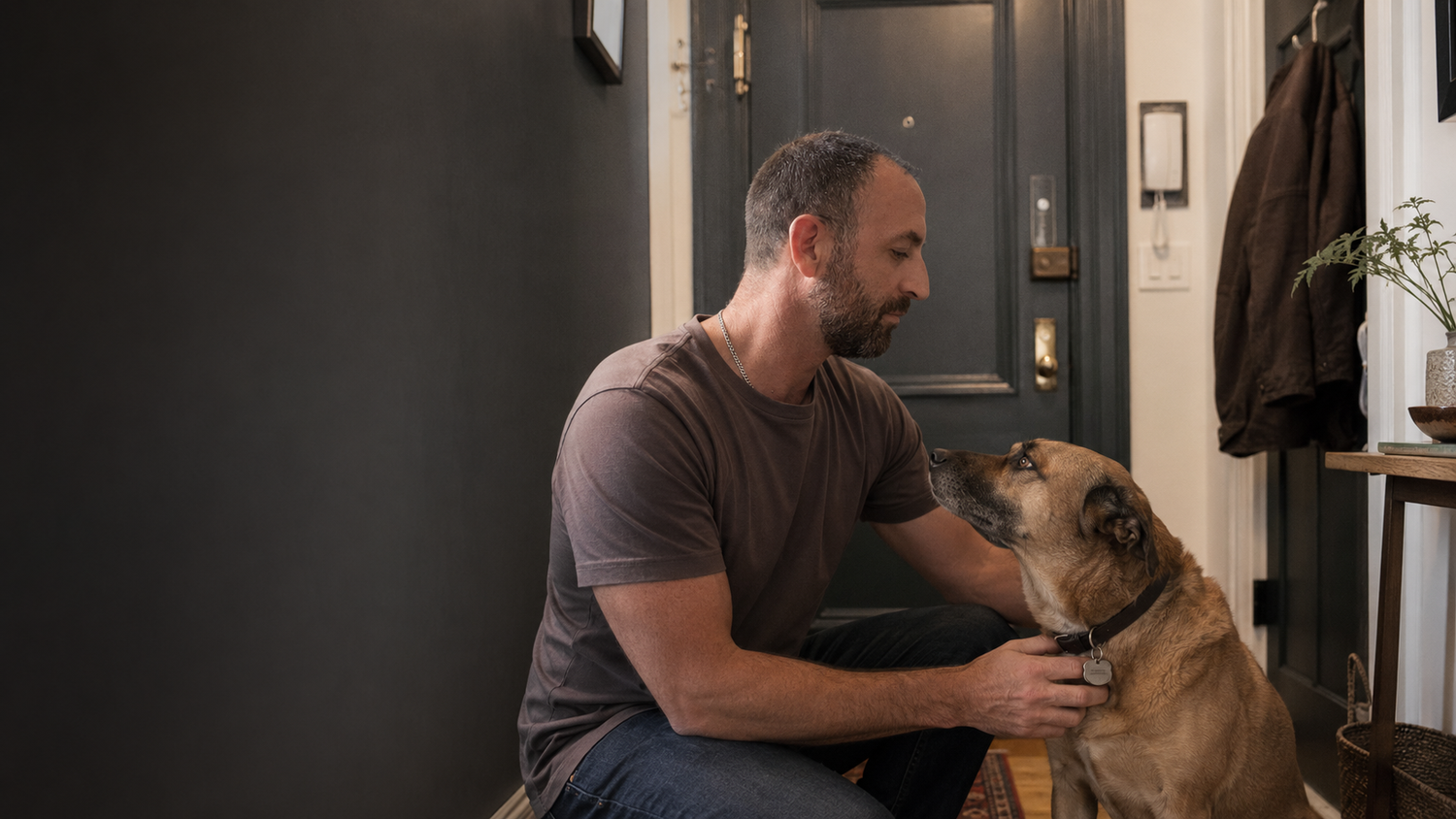
When your dog can’t be left alone — even for a few minutes
Separation anxiety isn’t misbehavior. It’s panic. For a dog with true separation anxiety, the moment you reach for your keys triggers genuine fear, and being left alone feels unsafe — which is why more exercise, more toys, or scolding don’t fix it.
PJH Dog Training treats separation anxiety in NYC with a gradual, evidence-based plan that changes how your dog feels about being alone. It’s a different problem from leash reactivity, so it gets its own approach — though if your dog struggles with both, we coordinate the two. For trigger-based barking and lunging, see our reactive dog training in NYC.
Signs of separation anxiety:
- Barking or howling the moment you leave
- Chewing or scratching at doors and windows
- Pacing, drooling, or trembling when alone
- Accidents from an otherwise house-trained dog
- Won’t eat or settle until you’re home

Separation anxiety hits different in an NYC apartment
City life raises the stakes on a dog who can’t be left alone. The same panic that’s stressful anywhere becomes a daily, high-pressure problem when you share walls, ride elevators, and answer to a building.
- 01 Thin walls, close neighbors Nonstop barking and howling can mean noise complaints, tension with neighbors, and even lease warnings in NYC buildings.
- 02 Small apartments There’s nowhere for a panicking dog to decompress, and destruction near the door is hard to manage in tight space.
- 03 Long days out Commutes and full workdays mean long absences — exactly what an anxious dog hasn’t yet learned to tolerate.
- 04 Doormen & hallways Constant hallway sounds, deliveries, and neighbors passing the door can keep a sensitive dog on high alert all day.

The one behavior problem that’s often best trained remotely
Separation anxiety is unusual: your dog has to practice being genuinely alone. So we coach you over video while watching your dog on camera — no stranger in the home changing the result, and a setup that mirrors your real departures.
That means we can work with you anywhere in NYC, on a schedule that fits real life. In-home sessions are added where they help — the right mix depends on your dog.
A gradual plan that rebuilds your dog’s comfort with alone-time
The science is well established: you change separation anxiety by keeping your dog under the threshold where panic begins, and slowly, systematically extending how long they can be alone while staying relaxed.
- 01 Assess We watch a recording of your dog during a real absence to find their exact threshold — the moment comfort turns to worry.
- 02 Desensitize Short, frequent practice absences that stay below threshold, building duration only as fast as your dog stays relaxed.
- 03 Build & maintain Steadily extend real-life absences and lock in the progress, with check-ins as your dog’s tolerance grows.
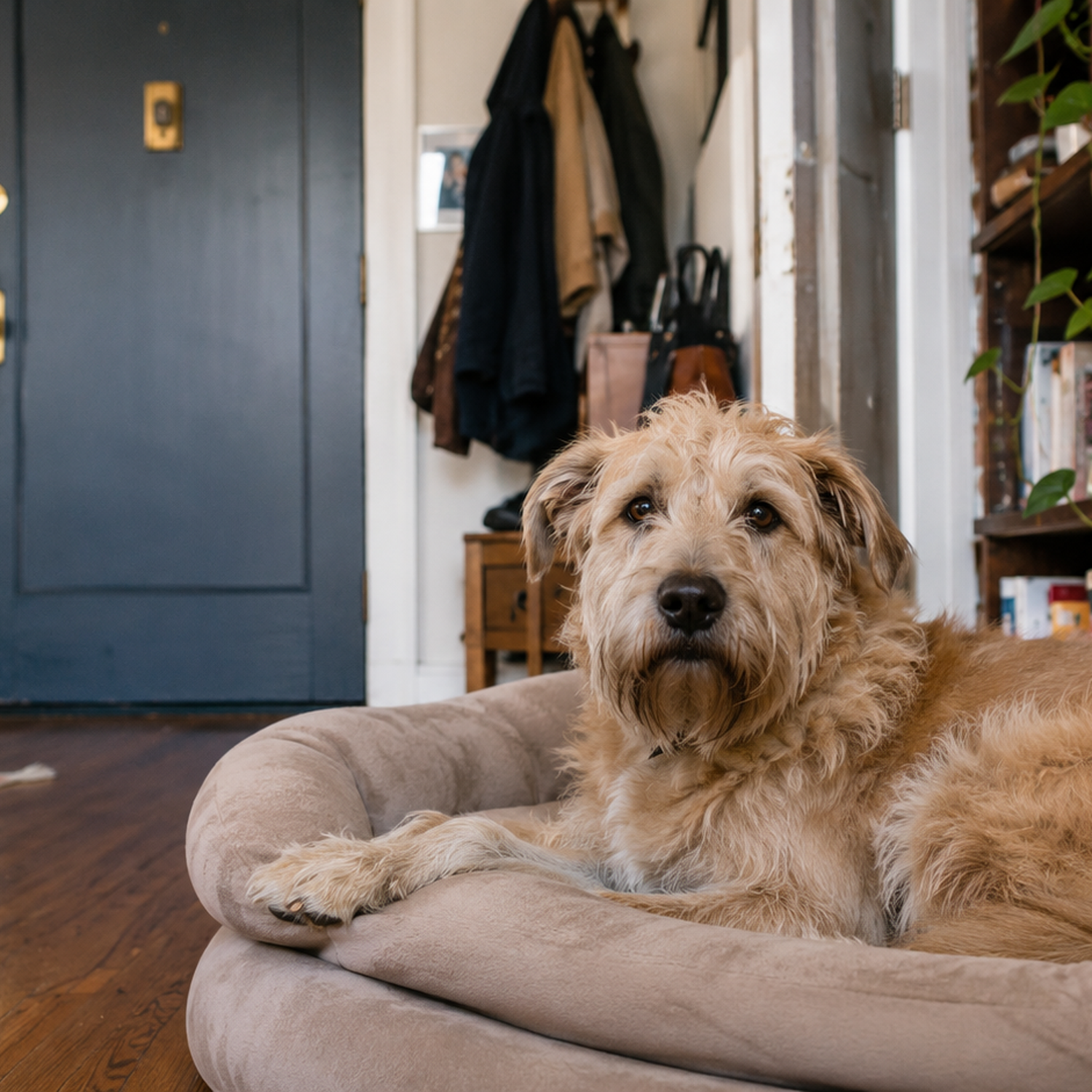
A dog who can finally relax when you leave
The goal isn’t a dog who merely tolerates being alone — it’s a dog who feels genuinely safe. Calm at the door, settled on their bed, and able to rest through an absence without panic.
That’s what a gradual, below-threshold plan builds: real comfort that holds up in everyday NYC life, one small win at a time.
Is it separation anxiety — or something else?
Not every dog who chews a shoe or barks a little when alone has separation anxiety. Boredom looks like calm, on-and-off chewing that improves with enrichment. Separation anxiety is panic that starts fast, often within minutes of your leaving, and doesn’t ease no matter how tired or entertained your dog is.
The fastest way to tell is a recording of your dog during a real absence. We’ll look at it together during your consultation and tell you honestly whether this is separation anxiety, a related issue, or something a different program fits better.
What our plan won’t do
- No flooding — we never leave a dog in panic
- No shock, prong, or scare tactics
- No crating a dog who panics when confined
- No one-size-fits-all “just ignore them” advice
- No pretending it’s a quick overnight fix
Alone-time behaviors we treat
PJH Dog Training helps NYC owners resolve the full range of distress that shows up when a dog is left alone — using humane, evidence-based desensitization.
Explore PJH Dog Training programs & related services
Separation anxiety rarely travels alone. Start with a consultation, then explore the programs and pages that most often go with it.
Dog Behavior Training NYC
Our full behavior-modification program — reactivity, aggression, fear, and anxiety in one place. View page → ProgramPrivate In-Home Training
One-on-one coaching for the alone-time setup, departure routine, and daily desensitization plan. View page → BehaviorReactive Dog Training NYC
For dogs who also bark or lunge at dogs, people, or noise — trigger-based reactivity. View page → BehaviorAggressive Dog Training NYC
For growling, snapping, or a bite history — a safety-first, force-free behavior plan. View page → PreventionIn-Home Puppy Training
Teach a young puppy that being alone is safe — the best prevention against separation anxiety. View page → ProgramConcierge Dog Training
Trainer-led support for busy owners who want help running the daily practice absences. View page → EnrichmentNose Work / Scent Work
Confidence-building enrichment and decompression that supports an anxious dog’s resilience. View page → PricingTraining Prices
Clear, all-inclusive pricing for consultations, private sessions, and virtual programs. View page → NeighborhoodDog Training Upper East Side
Neighborhood-specific in-home training across the Upper East Side. View page → LocationsAreas We Serve
Where we work across Manhattan, Brooklyn, and Queens — plus virtual citywide. View page → AboutAbout Pepe Hernandez
CPDT-KA certified, with a PhD in behavioral neuroscience — the science behind the method. View page →Common questions about separation anxiety in dogs
How do I know if my dog has separation anxiety?
Separation anxiety shows up only when a dog is left alone or separated from a specific person. Common signs include barking or howling, destruction near doors and windows, pacing, drooling, accidents in a house-trained dog, refusing to eat when alone, and attempts to escape. The clearest evidence comes from a recording of your dog during a real absence, which is the first thing we review.
Is separation anxiety different from a dog who is just bored or under-exercised?
Yes. Boredom-related behavior tends to be calm chewing or napping that improves with enrichment and exercise. Separation anxiety is panic — a genuine fear response to being alone that does not resolve with more toys or a longer walk. Treatment targets the underlying fear, not the energy level.
Can separation anxiety actually be cured?
Most dogs improve significantly with a structured, gradual desensitization plan, and many reach the point of being comfortably left alone. It is a step-by-step process measured in weeks to months, not a quick fix. Progress depends on consistency and on keeping your dog under the threshold where panic starts.
Why is separation anxiety often trained virtually?
Separation anxiety is one of the few behavior problems best trained remotely. Your dog has to practice being genuinely alone, so the trainer coaches you over video while watching your dog on camera. This means no stranger in the home affecting the result, sessions from anywhere in NYC, and a setup that mirrors real departures. In-home sessions are used where they add value.
Do you use force-free methods for separation anxiety?
Yes. PJH Dog Training uses science-based, force-free desensitization. We never flood a dog by leaving them in panic to “get used to it,” and we do not use crates as punishment or aversive tools. Training keeps your dog under threshold and gradually builds genuine comfort with being alone.
Should I crate my dog if they have separation anxiety?
It depends on the dog. Some dogs feel safer in a crate; many anxious dogs panic more when confined and can injure themselves trying to escape. We assess your dog’s response and design the alone-time setup around what actually lowers their stress, rather than forcing a crate.
How long does separation anxiety training take?
Most programs run over several weeks to a few months of short, frequent practice absences. Because the work is gradual and daily, it is paced to your dog and your schedule. Many owners start with a consultation and an initial block of guided sessions, then continue with check-ins as your dog’s tolerance grows.
My puppy cries when left alone — is that separation anxiety?
Not always. Puppies are still learning that alone-time is safe, and early crying is often normal adjustment rather than clinical separation anxiety. Building alone-time foundations early is the best prevention. If the distress is severe or escalating, a separation anxiety assessment is worthwhile.
Should my dog be on medication for separation anxiety?
Often, yes. When your veterinarian or a veterinary behaviorist recommends medication, we strongly encourage following that guidance. For many dogs with moderate to severe separation anxiety, anti-anxiety medication lowers the baseline panic enough that the training can finally take hold — it works alongside the behavior plan, not instead of it. Medication is not a failure or a shortcut; for many dogs it is what makes real progress possible. We are not veterinarians and do not prescribe, so we work in coordination with your vet.
What’s the difference between separation anxiety and separation distress?
They sit on a spectrum of severity, and they differ in what relieves them. Separation distress is the milder end — whining, pacing, restlessness, or mild vocalizing when left alone — and it usually eases when any company is present, whether a person or another dog. Separation anxiety is the more severe, panic-level end, with much more intense signs: destruction of household items, damage to the crate and risk of self-injury if crated, and urination or defecation inside the house even from an otherwise house-trained dog. It is often tied to one specific person, so the dog can stay distressed when that person is gone even if other people or dogs are home. Both respond to the same core approach — gradual, below-threshold desensitization to absences — but more severe separation anxiety usually takes longer, needs a careful management setup so your dog isn’t left over threshold between sessions, and is the case where veterinary medication (when your vet recommends it) most often helps the training succeed.
Help Your Dog Feel Safe Alone
Separation anxiety is treatable. Start with a consultation and we’ll review your dog’s alone-time, find their threshold, and build a gradual, force-free plan that works for your NYC life.