Reactive Dog Training NYC — In-Home, Force-Free Behavior Support
When your dog lunges, barks, or shuts down on walks, it's not bad behavior — it's their nervous system doing what it thinks is necessary to stay safe. We can change that — using what a PhD in behavioral neuroscience reveals about how the brain unlearns fear.
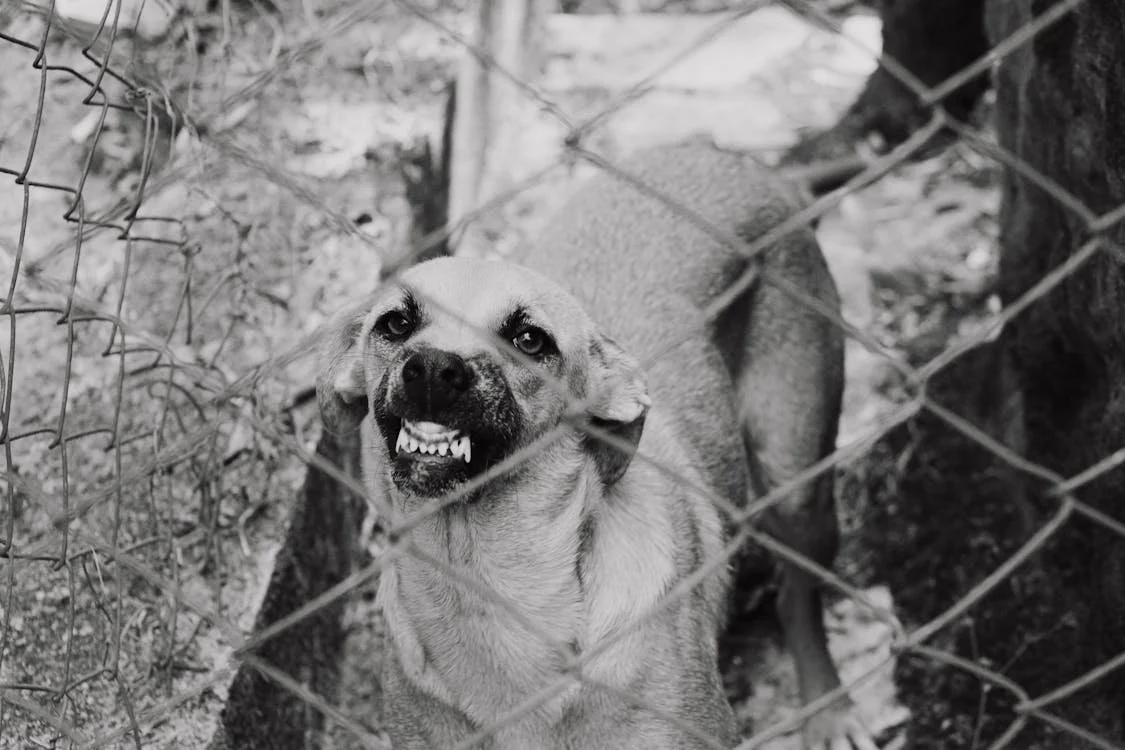
What dog reactivity actually is — and why punishment makes it worse
Reactivity is an exaggerated emotional response, not bad behavior
Barking, lunging, freezing, or pulling looks like aggression, but it's almost always rooted in fear or frustration. Your dog's nervous system is doing what it thinks is necessary to stay safe. The behavior you see is the symptom — the emotion underneath is the cause.
Punishment increases stress hormones and makes the underlying fear worse
Aversive corrections activate the fear center of the brain. They can suppress the visible reaction temporarily, but they don't change how your dog feels. Lasting improvement comes from changing emotional associations, not masking behavior.
Your dog works with me — not a junior trainer
A reactive case is too important to hand off to an intake desk or a trainee. I personally assess your dog, design the behavior plan, and run every session with you — start to finish.
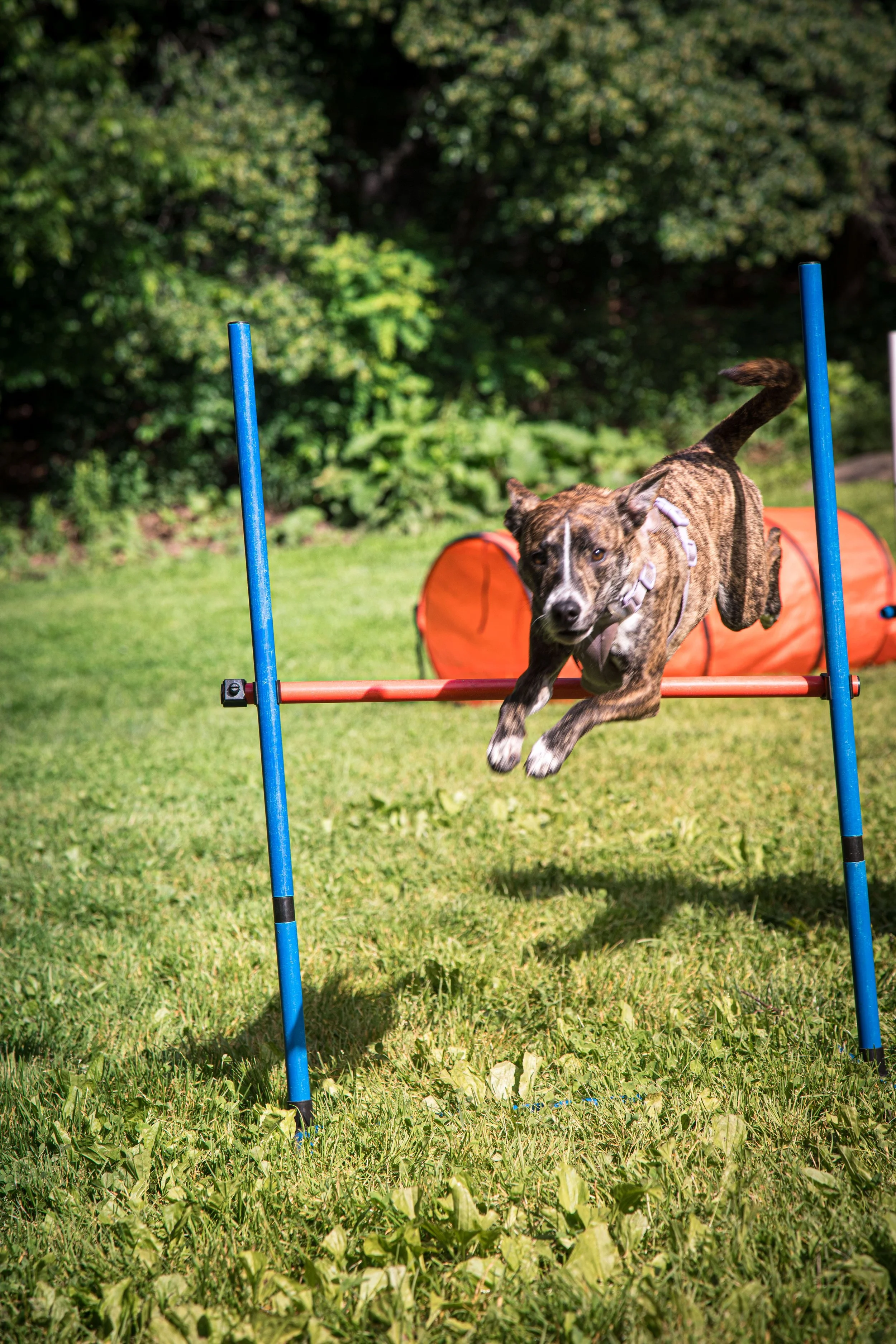
Real change starts with understanding what your dog is feeling — not just what they're doing.
Types of dog reactivity we treat in NYC
If your dog does one of these, you're in the right place. Every type below is fear- or frustration-based — and every one is treatable.
Dog Reactivity
Overarousal, frustration, or fear around other dogs on walks
Human Reactivity
Nervousness, fear, or lunging toward unfamiliar people
Noise Reactivity
Sensitivity to sirens, construction, thunder, or city sounds
Barrier Reactivity
Losing it at doors, windows, elevators, or behind fences
Movement Triggers
Chasing or reacting to bikes, scooters, skateboards, joggers
Leash Reactivity
Frustration and outbursts caused by the restriction of a leash
Fear Aggression
Rooted in anxiety, not dominance — the most misunderstood type in NYC
Off-Leash Reactivity
Dogs who lose control in off-leash areas like Central Park or Prospect Park
Puppy Reactivity
Early reactivity patterns in puppies — the best time to intervene
Why neuroscience-based behavior modification works for NYC dogs
Obedience alone won't fix reactivity. Real improvement happens when you change how your dog's brain processes triggers — not just how they respond to commands.
Emotional reassociation
Your dog's brain starts to connect those scary triggers with safety instead of danger. This changes the feeling, not just the behavior — which is why the results stick.
Threshold expansion
Gradually, your dog can handle being closer to triggers without going over the edge. What used to cause a meltdown at 50 feet becomes manageable at 10.
Nervous system regulation
Over time, your dog's baseline stress level drops. They're not just less reactive in specific situations — they're calmer overall. Durable, long-term change.
What progress looks like — a realistic timeline
Most reactive dogs start the same way: scanning, reacting, unable to settle, and getting worse with each encounter. Here’s the realistic arc from there — and results in NYC typically come faster than owners expect, because training happens in the actual environments that trigger your dog, not a controlled facility.
Getting grounded
- We identify your dog's specific triggers and thresholds
- Reduce accidental trigger flooding right away
- Introduce foundation skills you'll use every day
Visible progress
- Reactions become noticeably less intense
- Recovery time after triggers shortens significantly
- Your dog starts choosing to engage with you instead
Reliable confidence
- Calm, consistent responses become the norm
- Your dog handles real NYC environments with confidence
- You start trusting walks again
Every dog is different, but most NYC dogs show clear progress within 4–8 weeks.

This is where your dog is headed — calm, confident, and ready for anything NYC throws at them.
Reactive Resilience Therapy™ for NYC dogs
A structured, neuroscience-based framework developed specifically for reactive dogs living in one of the most demanding urban environments in the world.
Stabilization
We immediately reduce accidental trigger exposure and give your dog (and you) breathing room while building foundational skills.
Emotional Reconditioning
Triggers are carefully reintroduced at manageable levels, allowing your dog's brain to build new, calm associations.
Real-World Integration
Your dog practices calm behavior in actual NYC environments — sidewalks, parks, elevators, crowded blocks — with you leading.
Long-Term Stability
Calm behavior becomes your dog's default. Results are durable, predictable, and resistant to relapse.
Ready to start Phase 1? See how the agility-based method builds a calmer nervous system, or book your consult.
Book your stabilization consult How Reactive Resilience Therapy™ works
NYC-based. Science-backed. Reactive-dog focused.
Unlike most trainers, our approach is grounded in a PhD in Behavioral Neuroscience — meaning we don't just know what to do, we understand exactly why it works at the level of your dog's brain and nervous system.
We're not a general obedience school. Reactivity is our specialty — and we've built every part of our force-free method around the specific neurological and environmental challenges of training in New York City. Dense foot traffic, narrow sidewalks, elevator encounters — we train in your actual environment so results transfer immediately.
In-home reactive dog training in your neighborhood
If you've been searching for a leash reactive dog trainer near me or a dog behavior specialist in NYC, behavioral progress happens faster when training occurs in the environments your dog faces every day — not in unfamiliar facilities far from home.
Reactive dogs in dense urban environments face constant trigger exposure — elevators, narrow sidewalks, sudden encounters with other dogs, and unpredictable noise create neurological stress that generic training programs don't address. Sessions are conducted directly in your dog's real environment, ensuring progress applies immediately to your daily walks.
In Manhattan, we cover the Upper West Side, Upper East Side, Chelsea, Midtown, Tribeca, SoHo, Harlem, and Washington Heights. Brooklyn coverage includes Park Slope, Williamsburg, Brooklyn Heights, DUMBO, and Carroll Gardens. Queens covers Astoria, Long Island City, Forest Hills, and Jackson Heights.
Most reactive dogs benefit from starting with private in-home training before group cohorts. See all-in NYC pricing for current rates.

The walk you've been dreaming about is closer than you think.
Reactive dog training case studies
Real reactive cases — what the dog presented with, exactly what we did, and what changed over time. Reactivity is managed, not "cured," so each case notes what still needs support.
- Presenting
- Lunging and sustained barking at other dogs on leash. Baseline threshold ~40 ft — could not pass a dog on the same sidewalk without escalating. Owner was walking at 5 a.m. to avoid other dogs.
- Intervention
- 8 in-home and neighborhood sessions. Management first: front-clip harness, route planning, and distance control. Then counter-conditioning & desensitization (CC/DS) — pairing dogs-at-distance with high-value food, "engage–disengage," and a trained U-turn for over-threshold moments.
- Outcome
- Reactions dropped from most walks to roughly 1–2 per week. Working threshold moved from ~40 ft to ~8 ft. Recovery time fell from several minutes to a few seconds.
- Follow-up
- Wk 4: shorter reactions, faster recovery. Wk 8: passing dogs calmly at ~15 ft. Wk 12: neutral passes on Broadway at normal walking hours.
- Limitations
- Still needs distance from off-leash or charging dogs. Crowded weekend sidewalks are managed with route choice, not tested for their own sake.
- Presenting
- Barking and retreating from strangers — especially delivery workers and men in hats. Baseline threshold ~15 ft. Panicked in the building lobby and elevator; would not take food once triggered.
- Intervention
- 6 sessions worked directly in the building's lobby and elevator. Management: predictable exit routes and low-traffic timing. Behavior work: CC to lobby triggers, pattern games ("Look at That," 1–2–3 walking pattern), and cooperative-care to reduce baseline arousal.
- Outcome
- Calm lobby entries and exits. Recovery after a startle went from ~2 minutes to under 20 seconds. Now takes food near a stranger at ~6 ft.
- Follow-up
- Wk 4: calmer lobby, eating during exposure. Wk 8: passing delivery workers without barking. Wk 12: neutral to most strangers on the block.
- Limitations
- Sudden close approaches still trigger a bark. Owner cues guests not to reach over him and gives him a choice to approach first.
- Presenting
- Intense leash reactivity to dogs (frustrated greeter) with redirection onto the leash and handler when blocked. Baseline threshold ~60 ft. History of two redirected bites to the leash/sleeve.
- Intervention
- 10 sessions. Safety and management first: Y-front harness, long-line decompression walks, and muzzle conditioning as a safety net. Behavior work: CC/DS and threshold training at Prospect Park edges, impulse-control games, and structured parallel walking with a neutral helper dog.
- Outcome
- No redirected biting since week 3. Reactions became brief and recoverable. Working threshold moved from ~60 ft to ~20 ft; can now walk parallel with a known calm dog.
- Follow-up
- Wk 4: reliable U-turns, no redirection. Wk 8: parallel walks with the helper dog. Wk 12: passing unknown dogs at ~20 ft with engagement.
- Limitations
- Not a dog-park candidate. Needs ongoing threshold management and stays on-leash around unknown dogs. Progress holds with continued practice.
Real reactive cases from PJH Dog Training. Dogs' names have been changed to protect client privacy; behavior details, timelines, and outcomes are accurate. Individual results vary with each dog's history, severity, and consistency of practice.
How to start reactive dog training in NYC
Once you reach out, we'll guide you through every step. No guesswork, no overwhelm.
An in-home reactive dog training consultation in NYC — we meet your dog in their actual environment
A custom behavior modification plan built around your dog's specific triggers and threshold patterns
Force-free private sessions using counter-conditioning and desensitization (with optional group exposure when ready)
Real-world practice walks in your actual NYC neighborhood to generalize calm behavior
Ongoing coaching so you know how to maintain progress on your own
Reactive dog training NYC — FAQ
About leash reactivity, barking and lunging, behavior modification, and finding a certified reactive dog trainer in NYC.
Find reactive dog training by NYC borough
We train in your neighborhood so progress applies directly to your daily walks.
Manhattan
Upper West Side · Upper East Side · Chelsea · Tribeca · SoHo · Harlem · Midtown
Reactive Dog Training ManhattanBrooklyn
Park Slope · Williamsburg · Brooklyn Heights · DUMBO · Carroll Gardens
Dog Training in BrooklynQueens
Astoria · Long Island City · Forest Hills · Jackson Heights · Sunnyside
Dog Training in QueensWritten & reviewed by a certified specialist

References & further reading
The force-free, counter-conditioning approach described on this page reflects the current professional evidence base for treating fear- and frustration-based reactivity:
- American Veterinary Society of Animal Behavior (AVSAB). Position Statement on Humane Dog Training (2021).
- AVSAB. Position Statement on the Use of Punishment for Behavior Modification in Animals.
- Ziv, G. (2017). The effects of using aversive training methods in dogs—A review. Journal of Veterinary Behavior, 19, 50–60.
- Herron, M.E., Shofer, F.S., & Reisner, I.R. (2009). Survey of the use and outcome of confrontational and non-confrontational training methods in client-owned dogs showing undesired behaviors. Applied Animal Behaviour Science, 117(1–2), 47–54.
- Blackwell, E.J., Twells, C., Seawright, A., & Casey, R.A. (2008). The relationship between training methods and the occurrence of behaviour problems in a population of domestic dogs. Journal of Veterinary Behavior, 3(5), 207–217.
- Overall, K.L. (2013). Manual of Clinical Behavioral Medicine for Dogs and Cats. Elsevier / Mosby.
Where reactive dogs go next
If your dog reacts on every walk, the consult is the first concrete step
We'll meet your dog in your real environment, identify thresholds, and build the plan together.