Dog agility training NYC. Focus, fitness, confidence — for city dogs.
NYC dogs are wired for stimulation. A structured agility course gives that energy a purpose — and gives you a dog who thinks, focuses, and actually listens.
- CPDT-KA Certified
- PhD Behavioral Neuroscience
- Indoor + outdoor classes
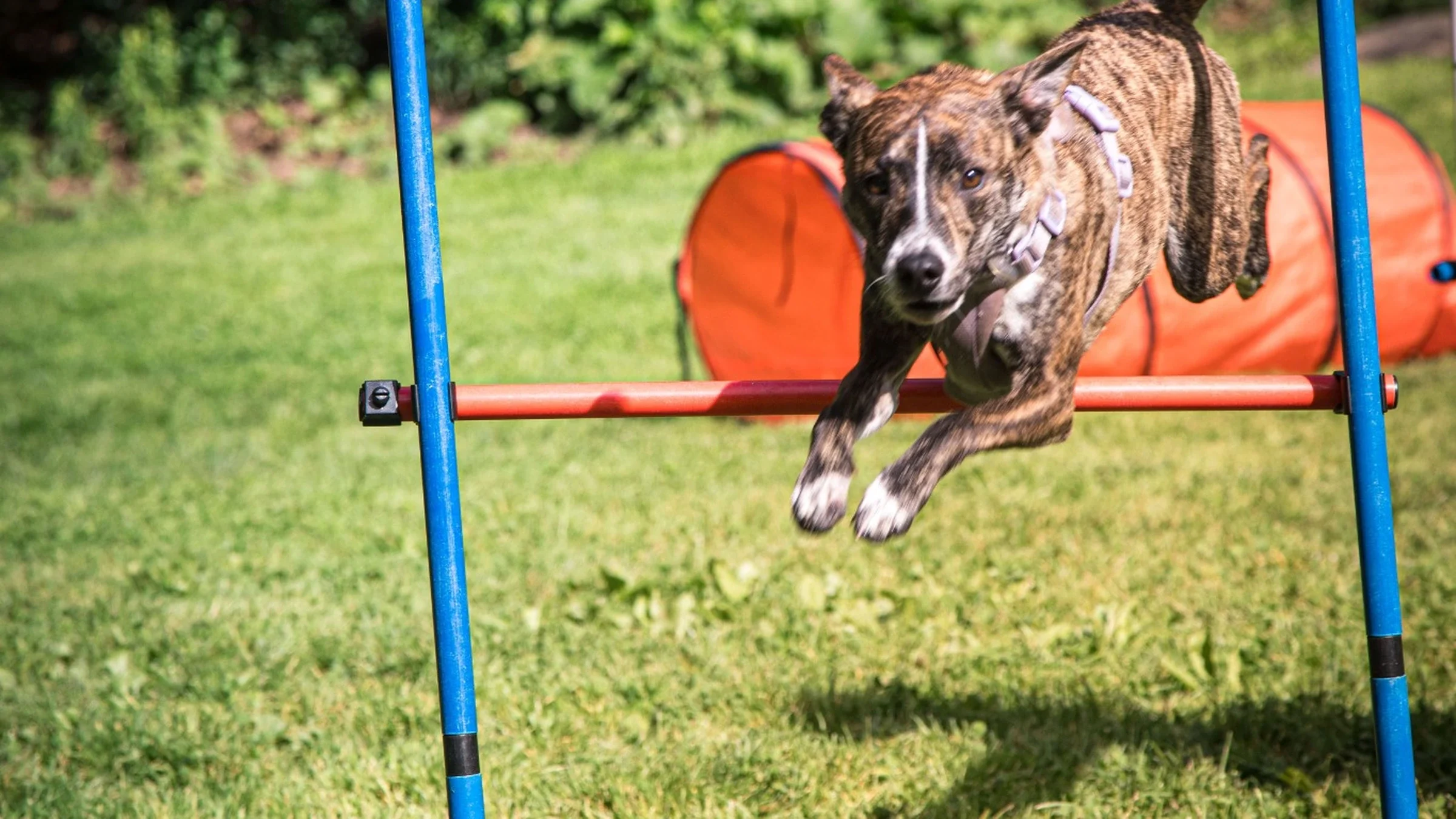
Dog agility classes in NYC for focus, confidence, and fitness
New York City is intense for dogs. Crowded sidewalks, constant noise, and nonstop movement demand mental organization all day. For many city dogs, the issue isn't excess energy — it's the cognitive effort required to stay regulated inside continuous stimulation.
Dog agility classes in NYC use structured movement to teach focus, decision-making, and emotional regulation. Agility becomes less about speed and more about clarity: move with intention, pause when needed, then re-engage. Because NYC dogs navigate scooters, strollers, elevators, and tight corners daily, sequences stay intentionally short, spacing is generous, and reset points are built in.
We run dog agility courses in NYC for dogs of all experience levels and backgrounds. You don't need a yard. You don't need competition ambitions. You need a dog who responds better, discharges energy more effectively, and has a clearer communication channel with you — and that's exactly what agility training builds.
What a dog agility course in NYC actually involves
Agility is a structured communication system between handler and dog, built on impulse control, directional cues, and obstacle fluency. Here's how a complete NYC program is structured.
1. Foundation skills
Before any equipment: handler targeting, sustained attention, sit-stay at the start line, directional cues, marker timing. The vocabulary your dog needs for a conversation on course.
2. Obstacle introduction
Each obstacle introduced individually — tunnels, jumps, A-frame, dog walk, weave poles, pause table, teeter — with positive reinforcement. Confidence on each obstacle before anything is chained.
3. Sequencing
Obstacles linked into short sequences, building handler communication in motion. Front cross, rear cross, and blind cross introduced as your dog gains fluency.
4. Course work
Full sequences and courses with tighter handling lines, reduced cues, variable obstacle orders. The goal is a dog who reads handler movement — not a memorized sequence.
5. NYC generalization
Skills tested in real NYC conditions — parks, outdoor spaces, higher-distraction environments — so behavior holds outside the training session.
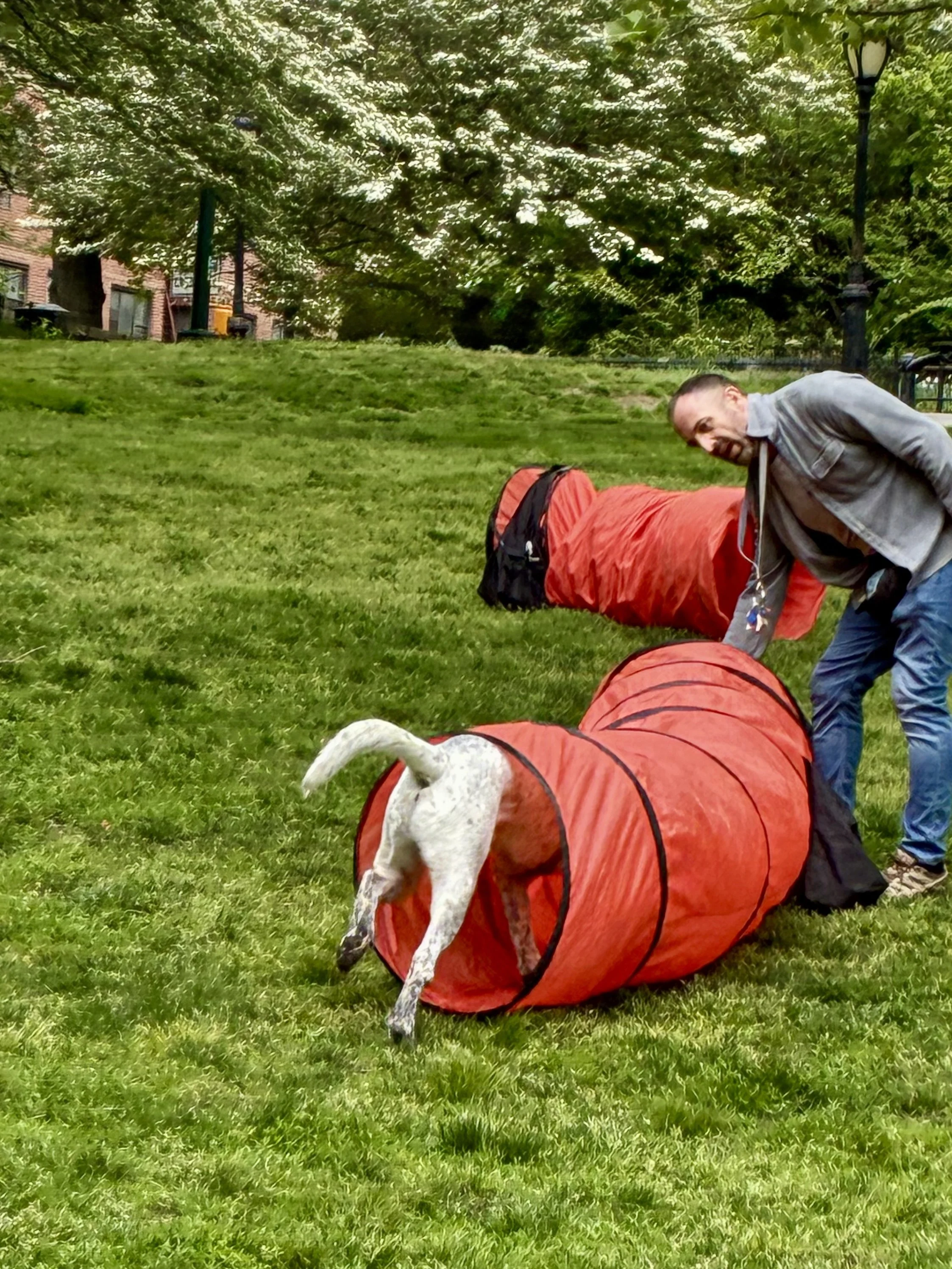
Tunnel work in the park — confidence built one obstacle at a time.
Agility obstacles used in NYC dog training
A complete agility course uses a standardized set of obstacles, each building a different aspect of handler communication, body awareness, and confidence.
Tunnel
Straight and bent tunnels. One of the most accessible intro obstacles — most dogs take to them quickly.
A-Frame
A triangular contact obstacle. Contact zones teach precise foot placement and impulse control at the base.
Dog walk
A long narrow plank — ramp up, flat section, ramp down. Develops body awareness, balance, and controlled deceleration.
Teeter / see-saw
The most challenging contact obstacle. Teaches dogs to stay calm and precise as equipment shifts under them.
Weave poles
A slalom pattern through upright poles. One of the most technically demanding obstacles to master.
Jumps
Bar, tire, and broad jumps. Height adjusted to the dog's size and condition. Puppies work on ground poles only until growth plates close.
Pause table
A raised platform where dogs hold a sit or down for a count. Impulse control under arousal — transfers directly to leash behavior.
Collapsed tunnel
Barrel with a fabric chute. Builds confidence with novel, enclosed spaces — effective for anxious dogs.
Targets & platforms
Hand and ground targets used in foundation training for precise foot placement, position holds, and handler focus.

The payoff — a regulated, confident dog ready for anything.
Agility levels: beginner to advanced
PJH's NYC program is structured across three progressive levels. Dogs advance at their own pace — readiness determines progression, not a fixed number of sessions.
Foundation
The starting point for every dog. We build the communication vocabulary before equipment. Dogs leave Level 1 with sustained handler focus, reliable response to directional cues, and a solid start-line stay.
Obstacle fluency
Individual obstacles introduced and solidified. Confidence on all standard equipment plus chaining of two to three obstacles. Front cross and rear cross introduced. Arousal management remains central.
Course work & generalization
Full sequences and courses. Handling complexity increases — tighter lines, reduced cues, variable obstacle orders, distance work. Skills tested in outdoor NYC environments to confirm transfer.
How agility builds focus and confidence in city dogs
Agility doesn't just entertain a dog. It changes how they process challenge, novelty, and frustration — and those changes carry into every other part of their life.
Confidence through competence
Every obstacle mastered becomes evidence — to the dog — that novel challenges are manageable. Shy and anxious dogs benefit especially: the A-frame that was terrifying on day one becomes something they run over without hesitation.
Handler focus under arousal
Agility requires your dog to read and respond to you while moving fast through a novel environment. The same mechanism as checking in with the handler when a trigger appears on leash — and the same skill that makes reactive dog walks manageable.
Impulse control & frustration tolerance
The pause table. The wait before the jump release. The hold at the start line. Agility is structured impulse control under increasing arousal — and dogs who struggle with this get measurably better with consistent practice.
Stress inoculation
Novel equipment, moving targets, varying environments, unpredictable sequences. Each session builds your dog's capacity to tolerate novelty and recover quickly from surprise. In NYC, that resilience is an essential quality.
Communication clarity
Agility is a conversation both sides get better at. Handlers learn to communicate direction and distance through body mechanics. Dogs learn to read those cues in motion. Carries into leash work, recall, and everyday reliability.
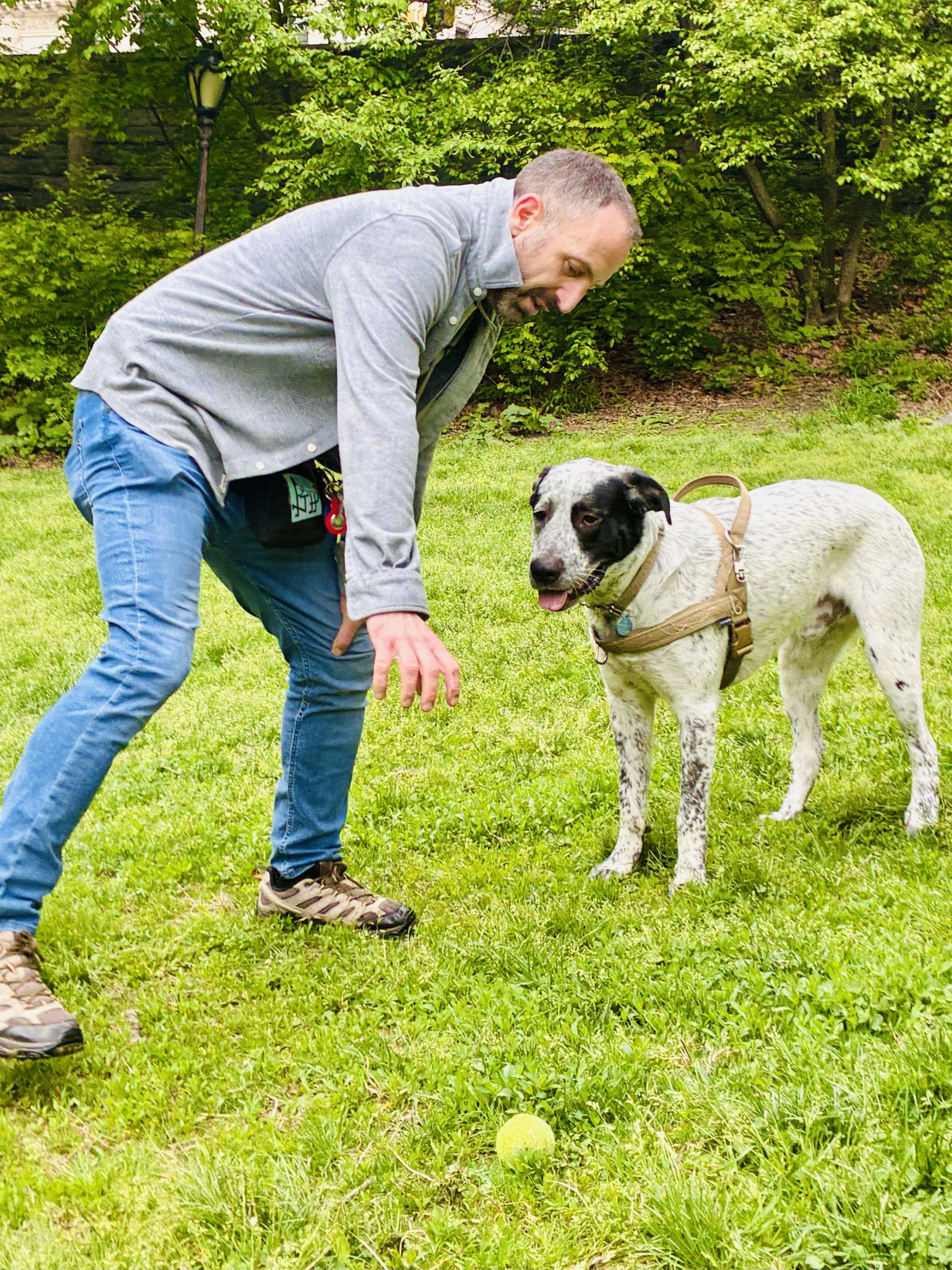
The real work — handler-dog communication that holds outside the course.
What progress looks like after agility classes in NYC
Progress in agility isn't abstract. It's specific — and most clients feel it before they can fully name it.
Indoor vs. outdoor dog agility courses in NYC
NYC dogs have access to both indoor and outdoor agility environments. Each offers distinct advantages depending on where your dog is in their training.
Indoor agility
- Year-round regardless of weather
- Controlled environment — lower trigger density
- Ideal for reactive, anxious, or easily distracted dogs
- Consistent obstacle setup and footing
- Best for early-stage agility and foundational skills
Outdoor agility
- Real-world generalization — Central Park, Riverside Park
- Higher environmental variability builds resilience
- Natural terrain: inclines, varying surfaces, open space
- Tests and confirms skills under real NYC conditions
- Ideal for dogs with established indoor foundations
Most programs begin indoors and move progressively toward outdoor generalization — see outdoor agility on the Upper West Side for the dedicated outdoor program.
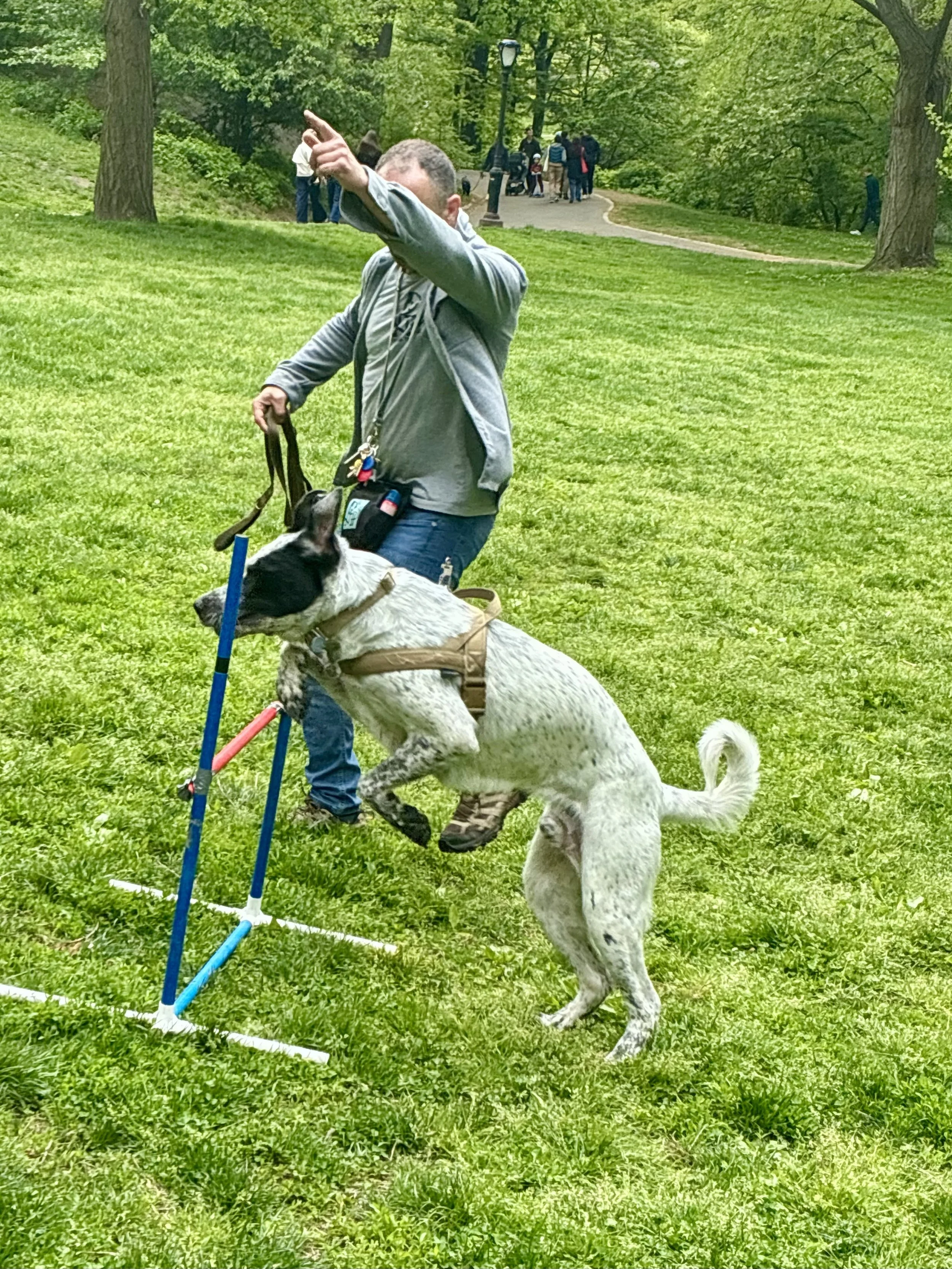
Real Central Park, real distractions, real handler cues.
Types of NYC dogs that benefit from agility
Agility works for a wider range of dogs than most people expect. You don't need a Border Collie or a competition goal.
High-energy & working breeds
Border Collies, Malinois, Aussies, Huskies. Dogs built for a job — agility gives them one.
Reactive dogs
Structured task work lowers arousal baseline. Handler focus transfers to leash reactivity management.
Shy & fearful dogs
Obstacle-by-obstacle confidence building is especially powerful for anxious dogs.
Puppies (4 months+)
Age-appropriate foundation agility builds handler focus before adolescence. Low-impact only until growth plates close.
Bored apartment dogs
Destructive behavior and hyper-arousal are often outlets for unmet mental stimulation. Agility is the right tool.
Handler communication gaps
Dogs that don't respond in motion or disconnect when aroused. Agility is handler-communication training under pressure.
All breeds welcome
Bulldogs, dachshunds, pit bulls, mixed breeds, toy breeds. Any healthy dog can participate.
Adult & senior dogs
Modified agility with lower obstacles — excellent mental engagement without physical strain.
Is dog agility right for every NYC dog?
Most dogs benefit from agility — but not every dog is ready to start immediately. We'd rather tell you that upfront than have you invest in a program that isn't the right fit yet.
Start with behavior modification first if your dog:
We'll tell you honestly during the initial assessment if agility is the right starting point — or if Reactive Resilience Therapy™ should come first.
Our NYC dog agility program
PJH runs agility as private sessions tailored to your dog's behavioral profile, physical capability, and training goals. We don't run generic class formats — the program is built around the individual dog.
Every program begins with a behavioral assessment before equipment is introduced. If your dog has reactivity, anxiety, or arousal management challenges, those are addressed as part of the program structure — not as a prerequisite you have to solve on your own first.
All agility training is force-free. No shock collars, no choke chains, no corrections. We use applied behavior science — classical conditioning, operant reinforcement, and systematic desensitization — to build obstacle fluency and handler communication that holds under real NYC conditions.
Private sessions run year-round — indoors through winter, and outdoor in Central Park and Riverside Park as seasons allow. Group Agility I and Agility II cohorts are also available. See all-in NYC pricing for rates.
NYC-based. Science-backed. Force-free.
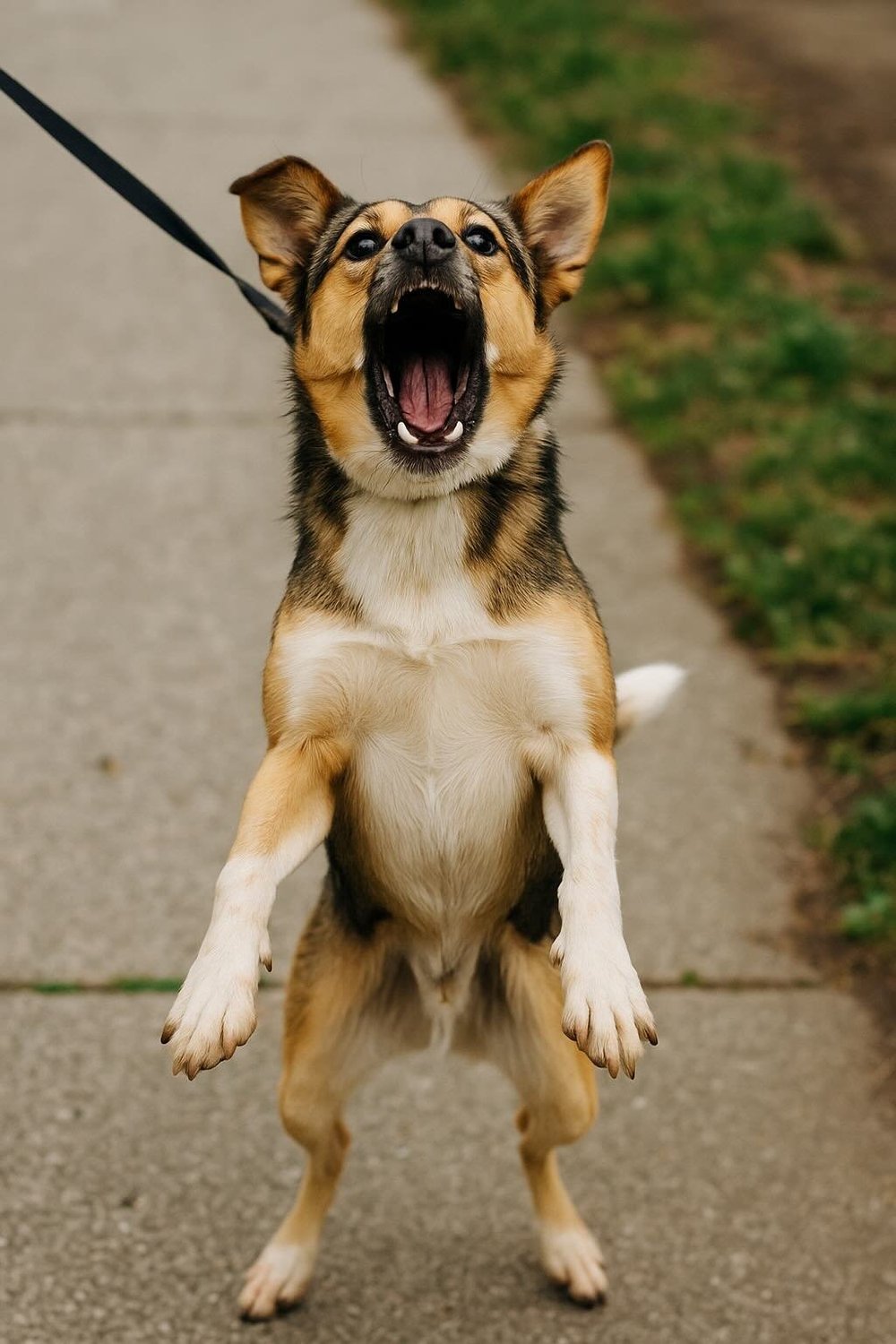
Our NYC agility program is led by a CPDT-KA certified trainer with a doctoral background in behavioral neuroscience. The combination matters: every program is grounded in how dogs actually learn — not just how they perform on course.
We specialize in working with NYC dogs that other trainers have written off: reactive dogs, anxious dogs, high-drive working breeds in apartments. Agility is one of the most powerful tools we use, and we apply it with precision and patience.
Real NYC agility stories
"We have a Belgian Malinois in a two-bedroom on the Upper West Side. I thought agility wasn't possible without a yard. PJH built us a full program and we now train in Riverside Park. She's genuinely tired for the first time in two years."
— Alex T., Upper West Side
"My reactive dog had tried three trainers before agility. Having a specific task to focus on — an obstacle right in front of her instead of scanning for a dog across the street — changed something. She's calmer on regular walks now too."
— Maya R., Chelsea
"He was terrified of the A-frame on day one. By session four he was running over it full speed. That confidence — I see it everywhere now. At the dog park, on the street, when we pass something new."
— Daniel K., Park Slope
"I just wanted a way to tire out my dog that wasn't another walk around the block. Agility did that — and completely changed how focused she is on me. Best investment I've made as a dog owner in NYC."
— Nina H., Hoboken
What your first agility session looks like
The first session isn't just an introduction — it's a behavioral assessment. We're watching how your dog interacts with a novel environment, takes reinforcement, and re-engages after distraction.
Meet, assess & settle
We let your dog sniff the space, observe the environment, and decide it's safe. No pressure, no rushing through a protocol. A dog that hasn't settled isn't ready to learn.
Foundation skills check
We assess your dog's existing attention, handler focus, and response to reinforcement in a new environment. This tells us where to start.
First obstacle introduction
Usually a flat tunnel or ground poles — accessible obstacles most dogs approach with curiosity. We watch body language, confidence level, and recovery from any hesitation.
Handler debrief
We walk you through what we observed — what your dog did well, what needs development, and what the program structure looks like going forward. You leave with a clear picture.
Sessions run 50–60 minutes. Bring high-value treats your dog reliably works for.
How dog agility training in NYC works
Initial behavioral assessment
We assess your dog's arousal baseline, handler focus, existing obstacle confidence, and any behavioral factors that shape how the program is structured.
Foundation skills
Before equipment, we build the communication vocabulary — handler targeting, sustained attention, start-line stay, and directional cues.
Obstacle training
Each obstacle introduced individually with positive reinforcement at your dog's pace. Confidence on each piece established before anything is chained.
Sequencing & course work
Obstacles linked into sequences, then full courses. Handling complexity increases as your dog gains fluency — tighter lines, reduced cues, variable orders.
NYC generalization
Skills tested in outdoor environments. The goal is a dog who runs agility the same way in Central Park as in the indoor training space.
Dog agility NYC — FAQ
Dog agility NYC — related pages
Your dog's focus starts here
Start with a consultation. We'll build the agility program around your dog's energy, temperament, and NYC life.