Puppy Obedience Training Manhattan: Reliable Manners for City Life
Reliable listening for puppies learning to thrive in Manhattan’s most distracting environments. From busy sidewalks to elevators and café patios, we teach obedience that holds up where city life actually happens.

Puppy Obedience Training Near You in Manhattan
When Manhattan owners search for the closest or nearest puppy obedience training near them, they want training that works around their block — not a suburban model that collapses under city pressure. We come to you and train in the exact places your puppy has to behave:
- Crowded sidewalks and busy intersections
- Apartment lobbies, elevators, and stairwells
- Building hallways and shared entryways
- Stroller-filled parks and playground edges
- Restaurant and café patios
A “stay” in a living room is easy. A “stay” at 72nd & Broadway during rush hour is earned — and that is exactly what we train for.
The Obedience Skills Your Puppy Actually Needs in the City
Every program is customized after a consultation, but reliable city obedience is built from the same core cues — taught with positive reinforcement and then proofed against real NYC distractions until they hold.
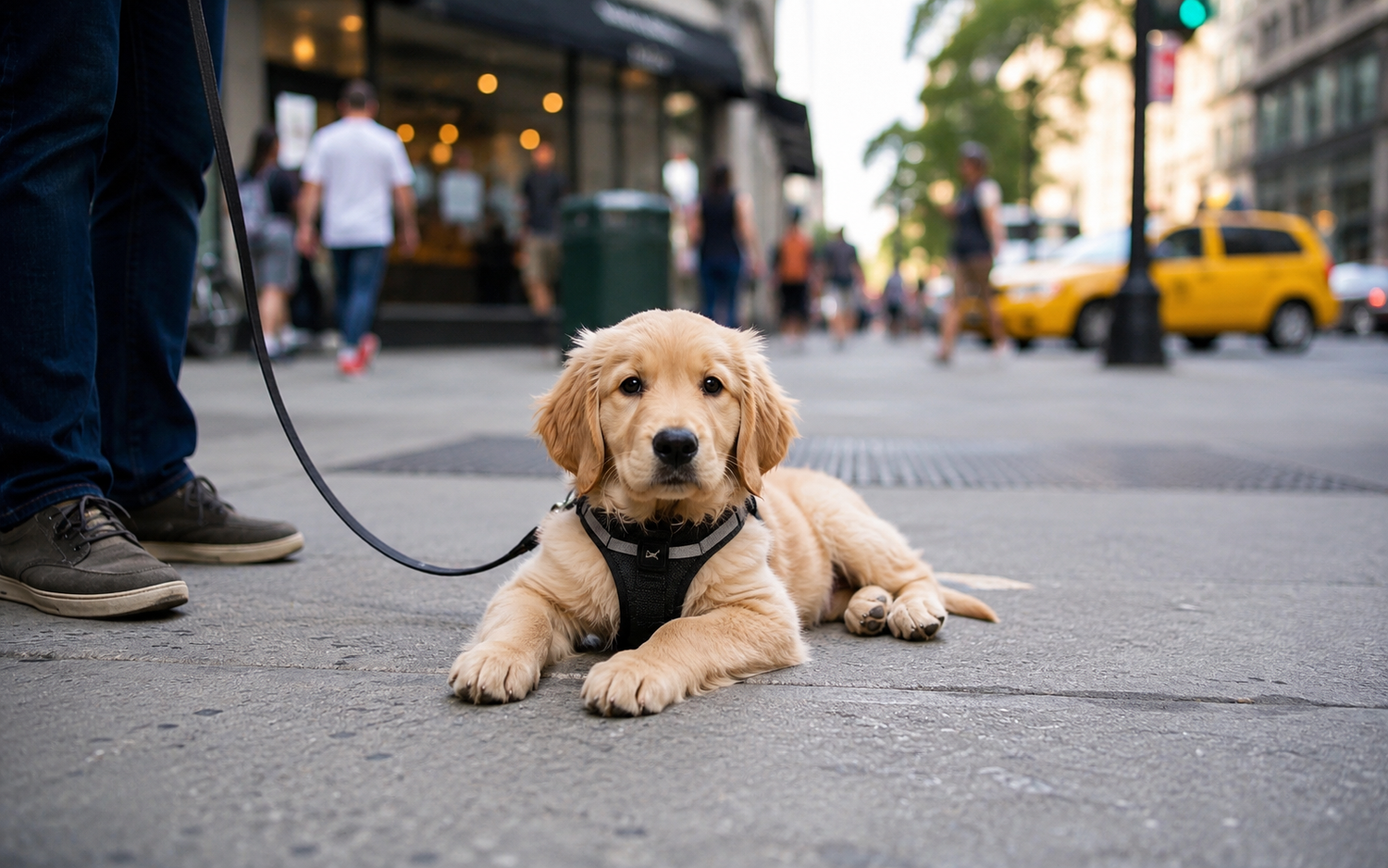
- Name response & attentionEyes on you before you ask for anything else.
- Sit, down & a rock-solid stayHeld through doormen, deliveries, and passing dogs.
- Place / settle on a matCalm in cafés, lobbies, and at home when guests arrive.
- Loose-leash walkingNo pulling on crowded sidewalks or toward every other dog.
- Reliable recallComes back even with squirrels, pigeons, and food on the ground.
- Leave-it & drop-itIgnores chicken bones and sidewalk hazards on command.
- Polite greetingsFour paws on the floor in elevators and building lobbies.
- Door & threshold mannersWaits at apartment doors, elevators, and crosswalks.
How We Build Obedience That Holds Under Distraction
Our trainer holds a CPDT-KA certification and a PhD in behavioral neuroscience, so every cue is taught around how your puppy’s brain actually learns — not repetition drills that fall apart the moment a bus goes by.
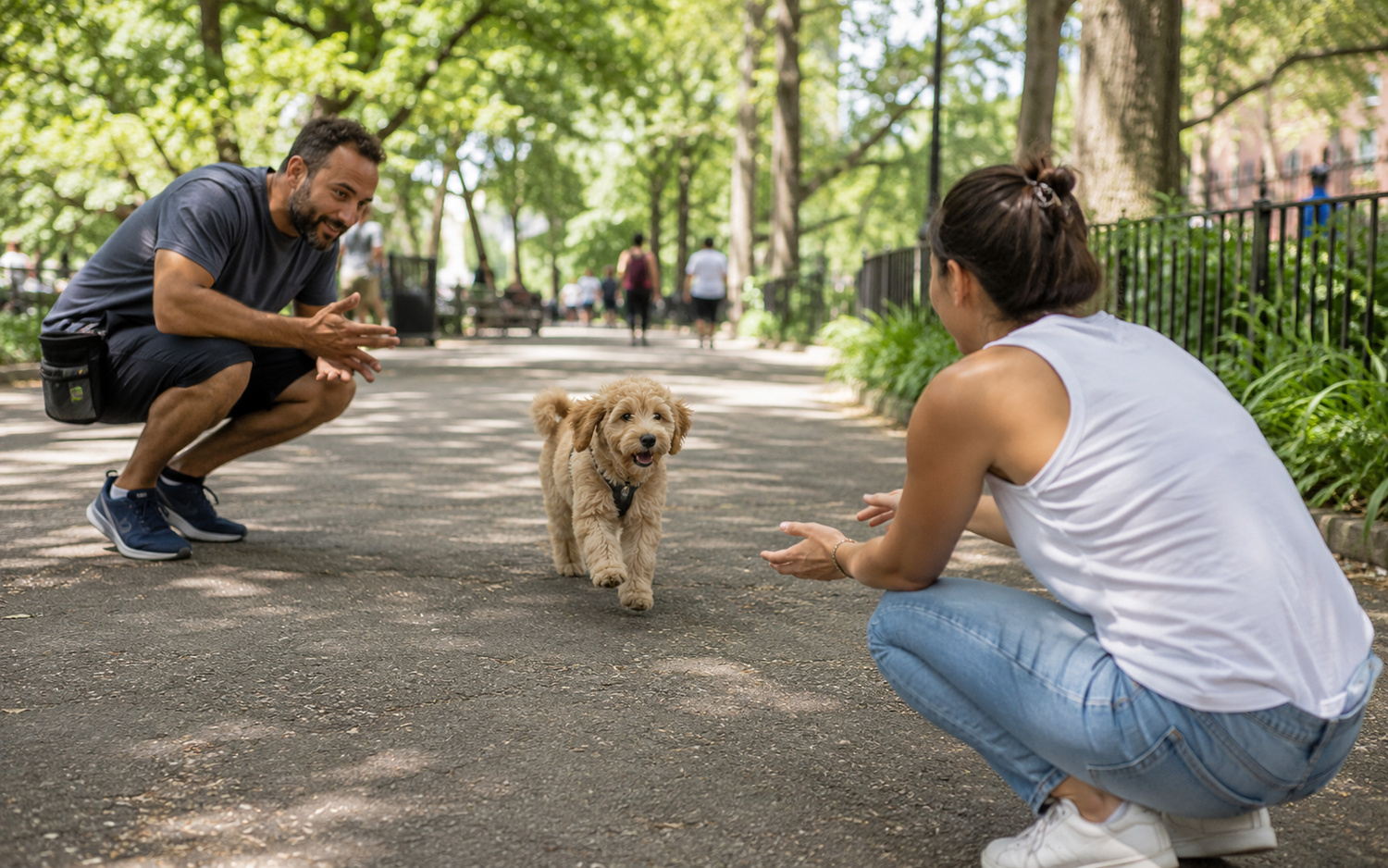
-
1
Teach the cue clearly, force-free
We build each behavior with positive reinforcement in a low-distraction setting first, so your puppy understands exactly what earns the reward and never learns to fear getting it wrong.
-
2
Proof it against real city distractions
Then we gradually raise difficulty — other dogs, delivery bikes, sidewalk food, lobby traffic — so the behavior generalizes to the places you actually need it.
-
3
Coach the humans
Reliable obedience is a team skill. We coach you and everyone who handles your puppy so the cues stay consistent between sessions and become permanent habits.
Science-Based, Force-Free, and Local to Your Block
You get the same PhD-level, CPDT-KA certified program our Manhattan clients rely on — delivered in your home, building, and neighborhood where the behavior happens.
Related Puppy & Training Programs
Frequently Asked Questions
Most puppies show clear improvement within the first few sessions. Reliable, distraction-proof obedience takes longer because Manhattan adds pressure — traffic, delivery bikes, lobbies, and tight hallways all require extra proofing. We build a plan around your puppy’s age, temperament, and your building and block.
Yes. Training is fully positive-reinforcement based and force-free, designed to protect puppies during sensitive developmental periods. Our trainer holds a PhD in behavioral neuroscience and is CPDT-KA certified, so cues are taught in a way that builds confidence rather than suppressing behavior.
Obedience builds structured, rule-based cues — sit, stay, recall, loose-leash walking, and settle. Socialization builds positive emotional associations with the world — people, dogs, sounds, and surfaces. They work best together; many clients pair this with our puppy socialization program.
You can start as early as 8 weeks. Early foundations — name response, attention, and gentle handling — set up everything that follows. It’s never too late, but the puppy and adolescent windows are the highest-leverage time to install reliable manners.
Yes. In-home sessions train exactly where the behavior happens: your apartment, lobby, elevator, hallway, and block. That’s the whole point — a cue that works in your living room but falls apart in the elevator isn’t finished yet.
That’s the goal. We proof each cue by gradually adding real distractions — sidewalk traffic, other dogs, food on the ground, delivery bikes — so your puppy can listen when it actually counts, not just in a quiet room.
Yes, in select neighborhoods within about an hour of the Upper West Side. Appointments outside Manhattan include an $85 extended area service fee per appointment — a door-to-door visit on a reserved weekly slot, not a travel charge. See our Areas We Serve page for covered neighborhoods.
Ready for a Puppy That Listens in the Real World?
Start with a consultation. We’ll assess your puppy and build a force-free obedience plan around your building, your block, and your goals.