Aggressive Dog Training NYC
Safe, neuroscience-based help for dogs who growl, snap, bite, or guard — dog-to-dog and dog-to-human aggression. Force-free behavior modification led by a CPDT-KA certified trainer who researched fear and aggression at the doctoral level, in your home across NYC.
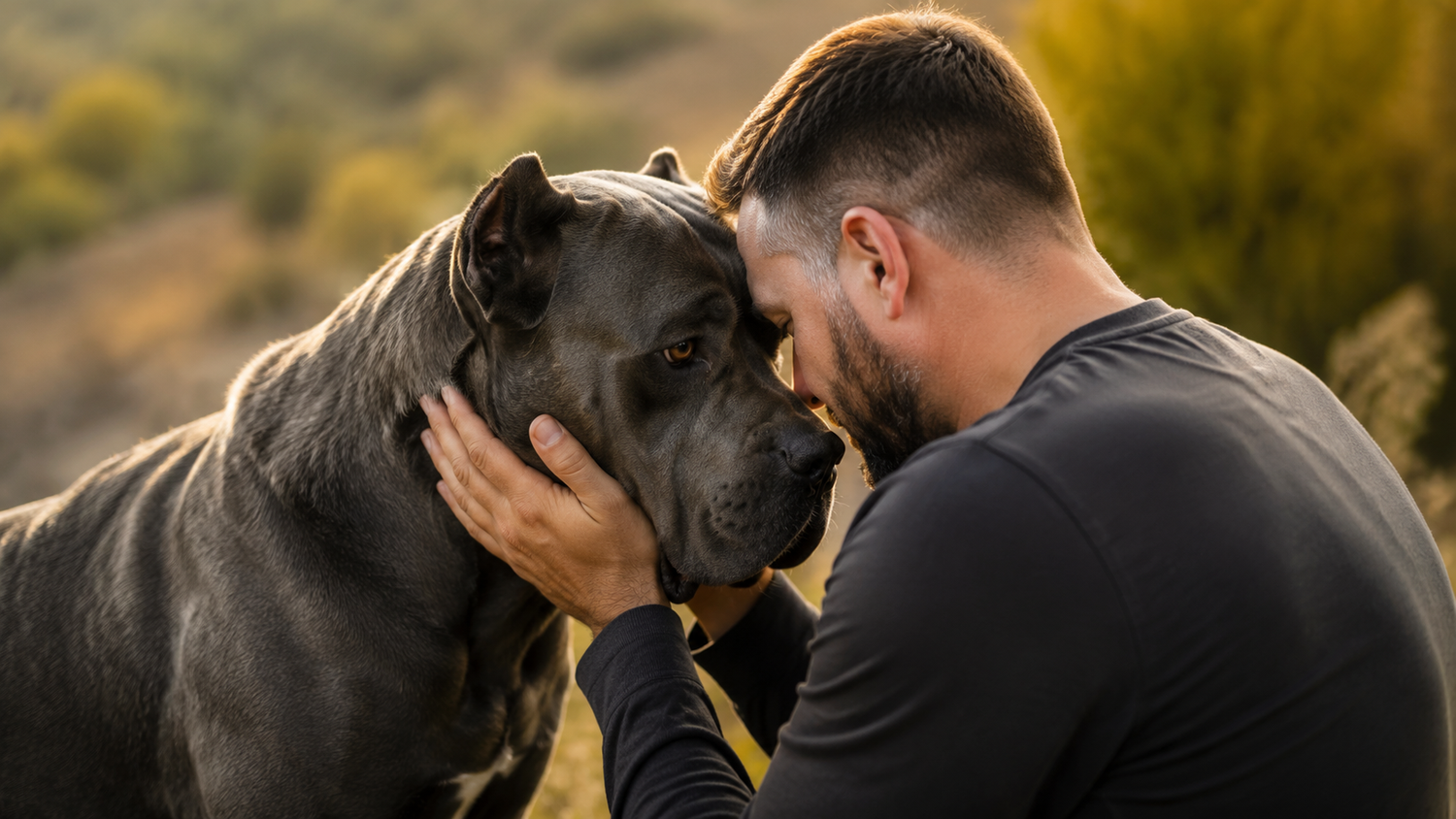
When your dog has growled, snapped, or bitten
Aggression is frightening, and it’s isolating — but it’s almost never about a “bad dog” or dominance. In the vast majority of cases, a dog that bites or guards is afraid, in pain, or trying to protect something it values. The behavior is a strategy that’s worked before, and that means it can be changed.
PJH Dog Training provides in-home dog aggression training in NYC for biting, resource guarding, dog-to-dog conflict, stranger-directed aggression, and household safety concerns. It’s a safety-first, evidence-based plan: we find what’s driving the behavior, manage the risk from day one, and change how your dog feels so the aggression is no longer needed. This is different from leash reactivity — if your dog barks and lunges but has never made contact, start with our reactive dog training in NYC.
And an aggression case is far too important to hand to a junior trainer or an intake desk. I personally assess your dog, design the plan, and run every session — start to finish. If you’re looking for an aggressive dog trainer in NYC, the first step is a private consultation to assess the behavior, identify risk, and build a safety plan.
Signs it’s aggression, not just reactivity:
- Growling, snarling, or showing teeth
- Snapping, nipping, or a bite history
- Guarding food, toys, spaces, or people
- Lunging with intent to make contact
- Stiffening, freezing, then exploding
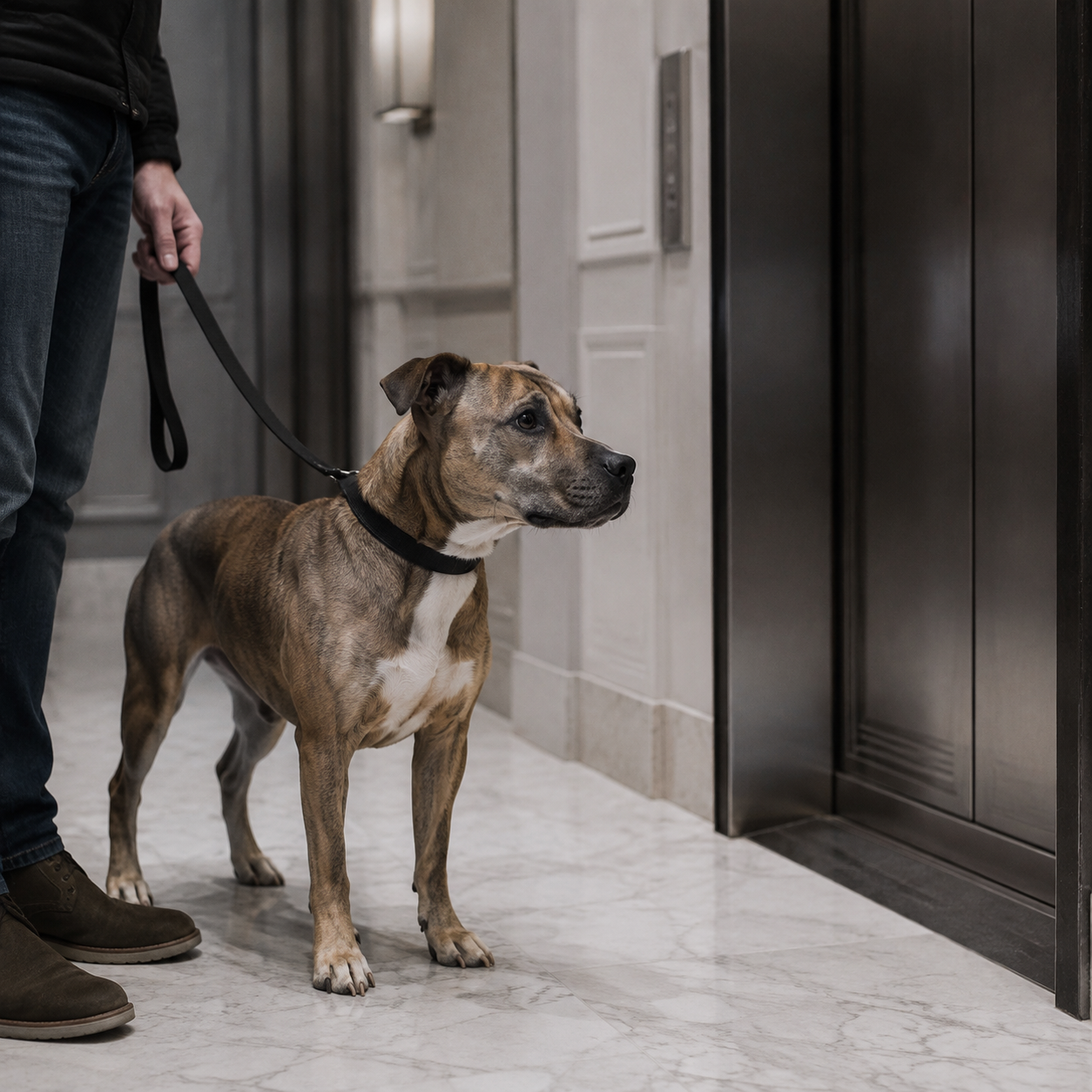
Aggression is harder — and riskier — in NYC
Nowhere is a dog packed as tightly against people and other dogs as in New York. Elevators, narrow lobbies, and crowded sidewalks give an aggressive dog no space and no exit — which raises both the risk of a bite and the legal and building consequences if one happens.
- 01 Elevators & lobbies Tight, unavoidable spaces force close contact with strangers and dogs — exactly the trap that triggers a bite.
- 02 Bites carry consequences In NYC a bite can mean liability, a report, and pressure from your building — management can’t wait.
- 03 No room to retreat A dog that feels cornered escalates. On a crowded sidewalk there’s often nowhere to create safe distance.
- 04 Constant strangers Deliveries, neighbors, and hallway traffic mean a guarding or fearful dog is triggered many times a day.

You can’t punish aggression out of a dog
Shock and prong collars, alpha rolls, and intimidation don’t fix aggression — they suppress the warning and raise the danger.
A dog punished for growling learns to skip the growl and go straight to the bite. We do the opposite: change the underlying fear so the aggression is no longer needed. For serious cases, that work runs through our flagship Reactive Resilience Therapy™ program.
A safety-first plan that changes the behavior at its root
Aggression work is built on a simple order of operations: keep everyone safe first, understand what the behavior is for, then rebuild the emotion underneath it — all without force or intimidation.
- 01 Assess & manage We identify the type and trigger of the aggression and put a management plan in place that lowers the risk of a bite from day one.
- 02 Change the emotion Working below threshold, we shift how your dog feels about the trigger so the fear — and the aggression it drives — steadily fades.
- 03 Build & maintain We generalize the new behavior to real NYC situations and give you the handling skills to keep your dog safe and predictable for good.
In-Home Aggressive Dog Training in NYC
Aggression rarely happens in a quiet training hall — it happens where your dog actually lives. That’s why this is in-home aggressive dog training: we work in your apartment, hallway, elevator, and lobby, on your block’s crowded sidewalks, and around the visitors and household members involved in real incidents. Meeting the behavior in context is how we manage genuine bite risk and build handling that holds up in the exact spots it tends to break down.
Aggressive Dog Training Across NYC
We take aggression cases across the city — in Manhattan, Brooklyn, and Queens. Not sure whether your dog’s behavior is aggression or reactivity? Start with a look at dog behavior modification and we’ll route you to the right track at your consultation.
The type of aggression decides the plan
“Aggressive” is a symptom, not a diagnosis. A dog guarding its food bowl needs a very different plan from a dog that’s afraid of strangers or one that redirects onto its owner in the heat of the moment. The first job of your consultation is to name what’s actually happening.
Once we know the function — what your dog is trying to get or avoid — the plan writes itself: manage the specific trigger, then change the emotion behind it. If leash barking and lunging is the bigger issue, our leash reactivity training is the better starting point.
Types of aggression we treat:
- Resource guarding — food, toys, spaces, people
- Dog-to-dog & leash aggression
- Dog-to-human, including household members
- Fear-based & territorial aggression
- Redirected & handling / grooming aggression

A dog you can trust — and finally relax around
The goal isn’t a dog that’s merely suppressed and waiting to go off. It’s a dog that no longer feels the need to defend itself — calmer around triggers, predictable in the moments that used to be dangerous, and safe to live with.
We’re honest about the range of outcomes: most dogs improve dramatically, and some are managed for safety rather than cured. You’ll always know which is realistic for your dog.
What an honest aggression program looks like
Be wary of anyone who guarantees they’ll “fix” aggression, or who reaches for a shock or prong collar. Aggression is a safety issue, and the responsible approach starts with management and an honest read on risk — not a promise that sounds good in a sales call.
We’ll always tell you the truth about your dog: whether we expect real resolution, or whether the safest path is careful lifelong management or a referral to a veterinary behaviorist. That honesty is the whole point.
What our plan won’t do
- No shock, prong, or e-collars — ever
- No alpha rolls, pinning, or intimidation
- No punishing the growl — the warning we need
- No one-session “cures” or guarantees
- No false reassurance about a dog’s risk
Aggression behaviors we work with
PJH Dog Training helps NYC owners address the full range of aggressive behavior — using humane, evidence-based behavior modification and a management plan that keeps everyone safe.
Explore PJH Dog Training programs & related services
Aggression rarely stands alone. Start with a consultation, then explore the programs and pages that most often go with it.
Reactive Resilience Therapy™
Our structured, force-free pathway for the serious fear, reactivity, and aggression cases. View page → BehaviorReactive Dog Training NYC
For barking and lunging on leash with no contact — trigger-based reactivity, not aggression. View page → Behavior hubDog Behavior Training NYC
Our full behavior-modification program — reactivity, aggression, fear, and anxiety in one place. View page → ProgramPrivate In-Home Training
One-on-one coaching in your home — where aggression work with a management plan is safest to start. View page → BehaviorSeparation Anxiety Training
For dogs whose distress shows up when left alone — a different problem, often alongside aggression. View page → EnrichmentNose Work / Scent Work
Confidence-building decompression that supports a fearful or reactive dog’s resilience. View page → PricingTraining Prices
Clear, all-inclusive pricing for consultations, private sessions, and behavior programs. View page → NeighborhoodDog Training Upper East Side
Neighborhood-specific in-home training across the Upper East Side. View page → LocationsAreas We Serve
Where we work across Manhattan, Brooklyn, and Queens — plus virtual citywide. View page → AboutAbout Pepe Hernandez
CPDT-KA certified, with a PhD in behavioral neuroscience — the science behind the method. View page →Common questions about aggressive dog training
Can an aggressive dog be trained?
In most cases, yes — aggression is behavior, and behavior can change. With a structured, neuroscience-based plan, the large majority of aggressive dogs become measurably safer and more predictable, and many resolve the behavior to the point of a normal life. What honest training does is lower the risk and rebuild the underlying emotion, not simply suppress a growl. A few dogs, because of the severity, the target, or the household, are managed for safety rather than fully cured — and we’ll tell you plainly which situation yours is after we assess it.
What’s the difference between a reactive dog and an aggressive dog?
They overlap, but the practical line is contact and intent to do harm. A reactive dog barks, lunges, and pulls at a trigger — usually on leash and at a distance — out of fear or frustration, and typically hasn’t made contact. Aggression is when a dog growls, snaps, or bites, guards food or objects, or actively tries to harm a person or another dog. Many reactive dogs aren’t dangerous; aggression is a safety and liability issue that needs a management plan from day one. If your dog barks and lunges but has never made contact, start with our reactive dog training. If there’s a bite history, guarding, or real risk of injury, this aggression program is the right fit.
My dog bit someone — what should I do first?
First, prioritize safety and management: prevent access to the situation that caused the bite, and see your veterinarian to rule out pain or a medical cause, since sudden aggression is often medical. Don’t punish the growl or the warning — a dog that’s punished for warning learns to skip the warning and go straight to a bite. Then book a professional assessment. In NYC, a bite can also carry legal and building consequences, so getting a qualified trainer involved early protects both your dog and the people around it.
What causes dog aggression?
Most aggression is rooted in fear, anxiety, pain, or the need to protect something the dog values — not dominance. The old dominance model is outdated and, when it leads to confrontation and force, it usually makes aggression worse. We assess the function of the behavior — what the dog is trying to achieve or avoid — before building a plan, and we always recommend ruling out a medical or pain component with your veterinarian, because pain is one of the most common hidden drivers of a sudden change in aggression.
Do you use force-free methods for aggression?
Yes, exclusively. PJH Dog Training uses neuroscience-based, force-free behavior modification — no shock collars, no prong collars, no alpha rolls or intimidation. Confrontation and pain reliably escalate aggression and teach a dog to distrust people; that’s the opposite of what a dog with a bite history needs. We change how the dog feels about the trigger so the aggressive response is no longer needed, and we keep everyone safe with careful management while we do it.
What types of aggression do you treat?
We work with resource guarding (food, toys, spaces, or people), dog-to-dog aggression, dog-to-human aggression including toward household members, leash aggression, territorial and barrier aggression, fear-based aggression, redirected aggression, handling and grooming aggression, and predatory behavior. We don’t work with every case in every home — where the risk to children or others is too high to manage safely, we’ll say so and refer you to a veterinary behaviorist.
Is my aggressive dog dangerous, and can it be around my kids?
That depends on the type of aggression, the bite history, and your specific home — which is exactly what the assessment determines. We give you an honest read on risk rather than false reassurance. For homes with young children, we’re conservative: safety and management come first, and in some cases the responsible recommendation is strict separation or a referral to a veterinary behaviorist. Our job is to reduce risk with a real plan, not to promise a guarantee we can’t make.
How long does aggression training take?
Aggression is one of the more involved behavior problems, and lasting change is usually measured in months, not days. From the first session you get a management plan that lowers risk immediately, and behavior change builds steadily from there. The timeline depends on the type and severity of the aggression, how long it’s been practiced, and how consistently the plan is followed at home. Anyone promising to fix aggression in one session is selling suppression, not safety.
Should my aggressive dog be on medication?
Sometimes, yes. When a dog’s baseline fear or arousal is high, medication prescribed by your veterinarian or a veterinary behaviorist can lower it enough that the behavior work can finally take hold — it supports the training, it doesn’t replace it. Medication isn’t a failure or a shortcut; for many dogs it’s what makes real progress possible. We’re not veterinarians and don’t prescribe, so we work in coordination with your vet, and we always recommend a medical workup to rule out pain first.
Do you guarantee you can fix my dog’s aggression?
No ethical trainer can guarantee an aggression outcome, and you should be cautious of anyone who does. What we commit to is an honest assessment, a plan that reduces risk from the first session, and force-free methods that give your dog the best realistic chance of change. Most dogs improve significantly. Some are managed for safety rather than cured. We’ll always tell you which is realistic for your dog rather than sell you certainty that doesn’t exist.
Get Ahead of the Aggression — Safely
Aggression is frightening, but it’s workable with the right plan. Start with a consultation and we’ll assess what’s driving your dog’s behavior, put safety and management first, and build a force-free plan that fits your NYC home.