Dog Training Upper East Side
Science-based, force-free training for puppies, leash manners, reactivity, apartment behavior, and real city-life skills — in your building, your block, and your park.
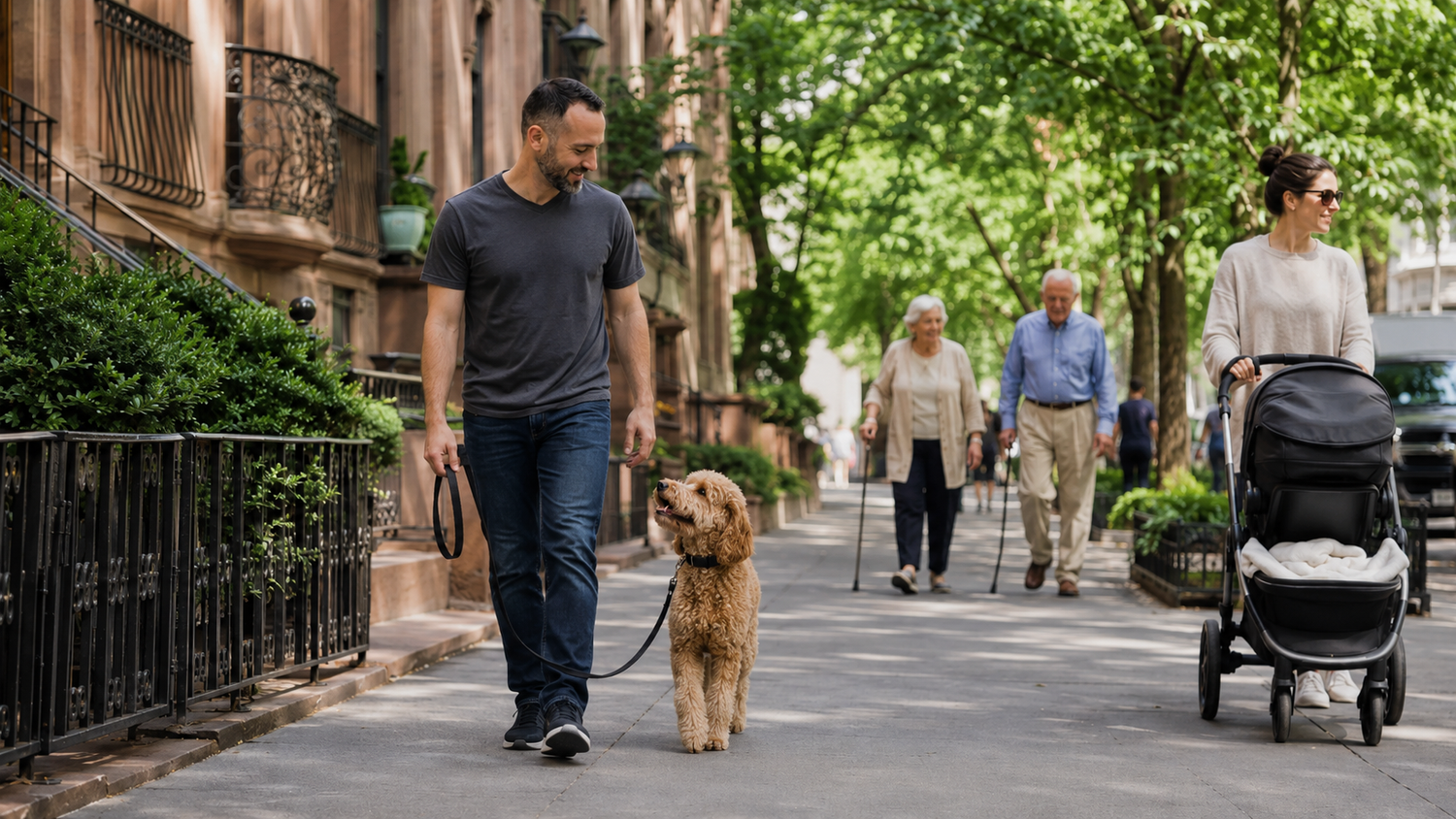
Built for elevators, sidewalks, lobbies, parks, and real NYC pressure
Dog training on the Upper East Side is not just about teaching “sit” in a quiet room. Dogs here need skills that hold up around narrow sidewalks, building entrances, doormen, delivery carts, school pickup traffic, strollers, scooters, other dogs, busy avenues, elevators, and crowded park paths.
PJH Dog Training provides private in-home dog training on the Upper East Side for families who want practical, humane, science-based training that works in the actual environments where their dogs live.
Best fit for:
- Puppies adjusting to NYC apartment life
- Dogs pulling on Madison, Lexington, or Third Avenue
- Reactive dogs near Carl Schurz or Central Park
- Dogs barking in elevators, lobbies, or hallways
- Owners who want clear, positive, realistic plans
Why Upper East Side dogs need neighborhood-specific training
A dog who behaves beautifully in a quiet living room may still struggle once the elevator doors open, a large dog rounds the corner, a stroller rolls by, or the sidewalk suddenly narrows. Upper East Side training has to account for the neighborhood itself.
- 01 Apartment pressure Elevators, lobbies, hallways, doormen, and neighbors create repeated close-contact moments many dogs find stressful or exciting.
- 02 Dog-dense sidewalks The Upper East Side has many dogs, which can make leash skills and dog-dog reactivity difficult without structured training.
- 03 Urban stimulation Traffic, delivery workers, bikes, scooters, children, strollers, and construction noise can quickly overwhelm sensitive or adolescent dogs.
- 04 Park transitions Carl Schurz, Central Park, and the East River paths are great training spaces — but require leash control, focus, and emotional regulation.
In-home dog training where it actually matters
In-home training lets your dog learn in the exact environment where problems happen: the apartment, hallway, elevator, lobby, building entrance, sidewalk, and your nearby walking routes.
Especially useful for jumping on guests, hallway barking, pulling toward dogs, freezing outside, potty training, puppy biting, overexcitement, or trouble settling indoors.
Puppy training for Upper East Side apartments, elevators, and sidewalks
Puppies on the Upper East Side need more than basic obedience. They need to learn how to live calmly in a vertical city: elevators, lobbies, crosswalks, dog-filled sidewalks, noises, visitors, children, strollers, and daily apartment routines.
- 01 Apartment foundations Potty training, crate comfort, alone-time, puppy biting, settling, and calm indoor routines.
- 02 City confidence Gentle exposure to elevators, lobby traffic, sidewalk movement, strollers, scooters, and neighborhood noise.
- 03 Early obedience Name response, recall, leash foundations, sit, down, touch, leave it, drop it, and polite greetings.
Reactive dog training on the Upper East Side
Some dogs bark, lunge, spin, freeze, growl, or pull when they see other dogs, strangers, bikes, scooters, joggers, or sudden movement. On the Upper East Side, those triggers can appear fast — especially near Carl Schurz Park, Central Park, Madison, Lexington, Second Avenue, building entrances, and narrow sidewalks.
Working with a reactive dog on the UES means training in those exact conditions, not a quiet room. Sessions focus on helping your dog feel safer, recover faster, respond to cues, and move through the neighborhood with more control and less emotional explosion. The goal is not to suppress behavior — it’s to change the dog’s emotional response and teach skills that hold up in real NYC life. It’s the same approach behind our dedicated reactive dog training program in NYC, applied block by block on the Upper East Side.
Common reactive-dog goals
- Less barking and lunging at dogs
- Better recovery after triggers
- Safer sidewalk passing skills
- Improved handler focus outdoors
- Calmer exits from elevators & lobbies
- Park training without overwhelm
Training help for the behaviors that make city life harder
PJH Dog Training helps Upper East Side dog owners address everyday behavior problems using practical, humane, evidence-informed training.
Where training happens
Training is most useful when it happens where your dog actually needs the skill. For Upper East Side clients, that may mean starting inside and gradually moving into the building and neighborhood.
- 01 Apartment Settling, puppy biting, jumping, guest manners, crate comfort, potty training, and calm indoor routines.
- 02 Hallway Doorway control, neighbor sounds, waiting calmly, and moving through shared building spaces.
- 03 Elevator Calm entries and exits, focus around people, and avoiding explosive greetings inside the box.
- 04 Lobby Doormen, visitors, delivery workers, dogs entering and exiting, and polite public behavior.
- 05 Sidewalk Loose-leash walking, trigger passing, sniff breaks, attention, and recovery after distractions.
- 06 Parks & entrances Practice near Carl Schurz Park, Central Park, the East River Esplanade, and your daily routes.
Choose the training format that fits your dog and schedule
Upper East Side clients can choose from private training, puppy training, reactive dog training, agility and outdoor enrichment, concierge training, and scent-based enrichment.
Private in-home training
One-on-one coaching in your apartment, building, and neighborhood for obedience, manners, behavior issues, and city-life skills.
View private trainingPuppy training
Early puppy support for potty training, biting, crate comfort, socialization, leash foundations, and apartment routines.
View puppy trainingReactive dog training
Training for barking, lunging, freezing, over-arousal, leash reactivity, and stressful sidewalk encounters.
View reactive trainingAgility & outdoor enrichment
Confidence-building, movement skills, body awareness, and structured enrichment for active dogs.
View agility trainingConcierge dog training
Trainer-led sessions for busy owners who want their dog to receive skilled practice with owner transfer sessions.
View concierge trainingNose work & scent work
Mental enrichment, decompression, confidence-building, and structured searching for puppies and reactive dogs.
View nose workExplore related PJH Dog Training services
This Upper East Side page is designed as a neighborhood guide. For deeper service-specific information, use the links below.
Private In-Home Training
View page → ServiceReactive Dog Training NYC
View page → BoroughReactive Training Manhattan
View page → ServicePuppy Training
View page → PricingTraining Prices
View page → LocationsAreas We Serve
View page → ServiceConcierge Dog Training
View page → ServiceAgility Training NYC
View page → ServiceNose Work / Scent Work
View page →Common questions about dog training on the Upper East Side
Do you offer dog training on the Upper East Side?
Yes. PJH Dog Training offers private in-home dog training on the Upper East Side, including support for puppies, leash manners, reactivity, barking, jumping, potty training, apartment behavior, elevator manners, and neighborhood walks.
Is Upper East Side dog training different from general dog training?
It can be. Upper East Side dogs often need skills for apartment buildings, elevators, lobbies, narrow sidewalks, parks, strollers, school pickup traffic, delivery workers, and frequent dog encounters. Training should prepare dogs for the environments they actually experience every day.
Can you help with puppy training in an Upper East Side apartment?
Yes. Puppy training can include potty training, crate comfort, puppy biting, alone-time foundations, calm indoor behavior, leash introduction, handling, elevator exposure, sidewalk confidence, and early obedience.
Can you help my dog stop barking and lunging at other dogs near Carl Schurz Park or Central Park?
Yes. Reactive dog training can help dogs who bark, lunge, freeze, spin, pull, or become overwhelmed around other dogs. Training focuses on changing the dog’s emotional response, building handler focus, improving leash skills, and practicing safer passing strategies.
Where do Upper East Side training sessions happen?
Sessions may happen in your apartment, hallway, elevator, lobby, building entrance, nearby sidewalks, local parks, or along your normal walking route. The exact setup depends on your dog’s behavior goals and current skill level.
Do you use positive reinforcement training?
Yes. PJH Dog Training uses science-based, force-free, reward-based methods. Training emphasizes safety, emotional regulation, clear communication, and practical skills rather than intimidation, leash corrections, or fear-based handling.
Can training help with elevator and lobby reactivity?
Yes. Elevator and lobby issues are common in NYC apartment buildings. Training may include calm exits, waiting skills, attention games, distance management, threshold work, polite greetings, and structured practice around predictable building routines.
What training program should I book first?
Most clients begin with a consultation so the dog’s behavior, environment, history, and goals can be assessed. From there, PJH Dog Training can recommend private in-home training, puppy training, reactive dog training, concierge training, agility, or enrichment-based options such as nose work.
Book Upper East Side Dog Training
Practical, science-based training for your dog’s real life — apartment routines, sidewalks, lobbies, elevators, parks, puppy skills, leash manners, reactivity, and more.