
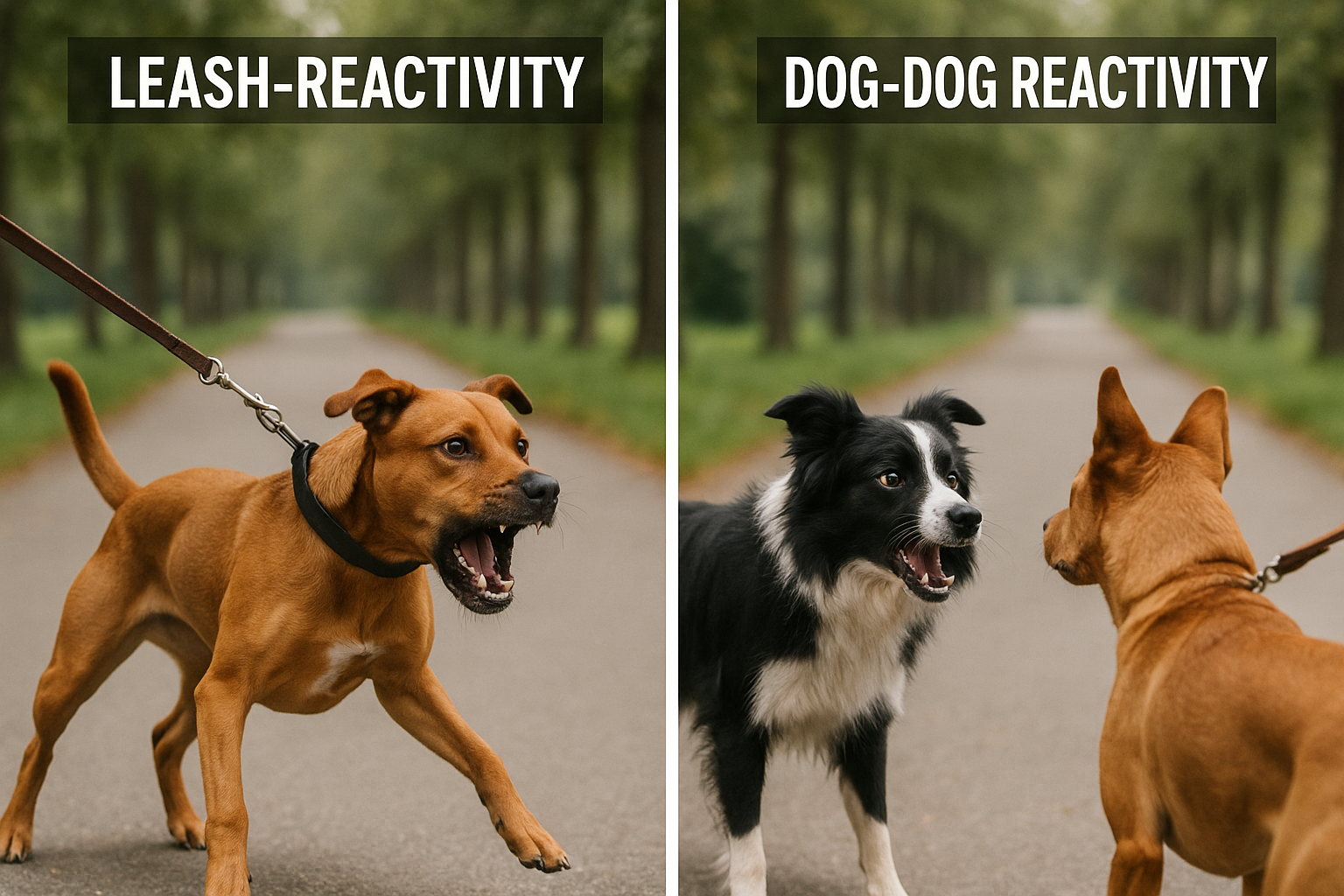
Leash & Dog-Dog Reactivity — Two Faces of Canine Reactivity
Reactivity isn’t about “bad behavior” — it’s about dogs who feel too much, too fast, with nowhere safe to put that energy. Whether it shows up as barking, lunging, or freezing, reactivity is the nervous system’s way of saying I’m overwhelmed. Reactive Resilience™ reframes those moments not as disobedience, but as communication. By teaching dogs emotional regulation through calm, predictable training, we help them recover confidence, build trust, and move through the world without fear driving the leash.

The Importance of Teaching Your Dog Loose Leash Walking: A Neuroscientific Perspective
Loose leash walking is more than good manners—it’s neuroscience in action. By managing arousal and stress, calm walks prevent reactivity, boost focus, and support your dog’s long-term emotional health.

Prevalence of Maladaptive Behaviors in Dogs
Research shows most dogs experience at least one maladaptive behavior, from fear and noise sensitivity to separation anxiety or aggression. Early training and behavioral intervention are key to reducing these issues and improving your dog’s well-being.

Understanding Dog Reactivity in Real-Life Scenarios
Dog reactivity—barking, lunging, growling—can make walks stressful. This guide explains leash, fear, frustration, and protective reactivity, plus how professional training in NYC helps dogs stay calm and confident.